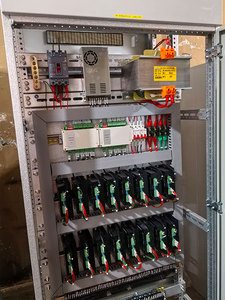
Engineered to ISO 9001 quality standards. Complete turnkey solutions including directional inlets, intelligent PLC cabinets, high-pressure nozzles, and IP67 waterproof drivers.
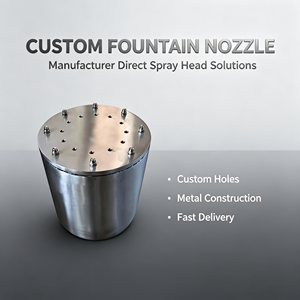
Combining complete in-house mechanical & electrical manufacturing with world-class hydraulic engineering expertise for residential, commercial, and municipal aquatic facilities.
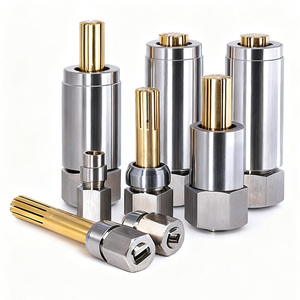
From micro-dosing peristaltic pump heads to SS 304/316 return jet fittings, fountain nozzles, and high-pressure descaling hardware, our integrated production lines minimize procurement cost while guaranteeing strict dimensional tolerances.
We build automated chemical dosing systems complete with custom PLC control cabinets, DMX/RGB lighting controllers, and IP67 constant voltage switching power supplies to streamline facility management.
Backed by over two decades of engineering history and ISO 9001 compliance, every automatic dosing skid undergoes 100% hydrostatic pressure testing, continuous chemical calibration, and electrical safety validation prior to export.
Water sanitation management across commercial swimming pools, industrial cooling towers, municipal water treatment facilities, and architectural aquatic displays requires high-precision chemical dosing. An Automatic Chlorine Doser serves as the critical backbone of contemporary water quality architecture, maintaining Oxidation-Reduction Potential (ORP) and Free Available Chlorine (FAC) within strict safety boundaries.
SEO & Sourcing Takeaway: Modern sourcing strategies favor OEM manufacturers in China that integrate electro-hydraulic components, micro-processor PID feedback loops, and corrosion-resistant materials (such as PVDF, PTFE, and Hastelloy C) into pre-assembled modular skids.
An automatic dosing system operates as a closed-loop control system consisting of four dynamic modules: sensing/analytical measurement, digital controller processing, mechanical metering/pumping, and fluid hydraulic dispersion. The primary goal is to counteract organic load fluctuations without over-dosing, which causes chloramine off-gassing and equipment corrosion.
| System Component | Material / Technical Specification | Operational Function | Key Maintenance Metric |
|---|---|---|---|
| Metering Pump Head | PVDF / PTFE Diaphragm or Santoprene Peristaltic Tube | Delivers precise liquid sodium hypochlorite under pressure | Inspect valves/tubing every 3,000 operational hours |
| ORP / pH Probes | Sealed Glass Electrode with Platinum Ring / Ag/AgCl reference | Continuous electrochemical potential measurement (mV & pH) | Bi-weekly buffer solution calibration (pH 4.01 / 7.00) |
| PLC Control Cabinet | IP65 Enclosure, Modbus RTU / RS485 / Ethernet Output | Analyzes probe telemetry; modulates pump stroke/speed via PID algorithm | Annual check of solid-state relays and fuse blocks |
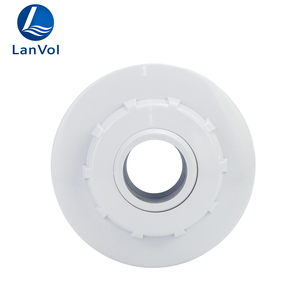
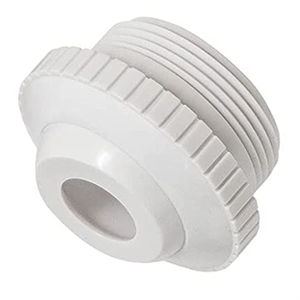
| Injection Fitting Jet | SP1419D 3/4" Directional 1-1/2" MIP Thread Inlet Jet | High-velocity dispersion into return water stream preventing localized concentration | Quarterly inspection for calcium scaling build-up |
When selecting automatic chlorine dosing equipment from Chinese OEMs, engineering teams must evaluate pump mechanisms based on system head pressure and daily volumetric output demands:
Peristaltic Metering Pumps: Ideal for small-to-medium aquatic facilities, residential pools, and spa features (flow rates: 0.5 L/h to 12 L/h at pressures up to 3 bar). Peristaltic units are self-priming and immune to off-gassing issues typical of sodium hypochlorite, as chlorine gas bubbles pass through the roller assembly without causing vapor lock.
Solenoid or Motor-Driven Diaphragm Pumps: Required for commercial water parks, large hotel pools, and municipal applications demanding high injection pressures (up to 16 bar) and large capacities (up to 500 L/h). Utilizing double-ball check valves made of ceramic or PTFE, these units deliver long service life under heavy-duty operational cycles.
Achieving total sanitation efficiency requires seamless integration with pool returns and electrical control enclosures. For example, high-velocity water movement supplied by precision directional fittings like the SP1419D 3/4" Directional Hydrostream Return Eyeball Water Inlet Jet ensures rapid mixing of chlorinated water throughout the entire water body, eliminating dead zones where algae and bacteria thrive.
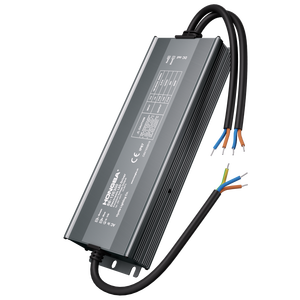
Furthermore, automated dosing skids rely on stable electrical power distribution provided by industrial-grade drivers, such as the LED Switching Power Supply 300W 12V 24V IP67 Waterproof Ultra Slim Aluminum LED Driver, which safeguards sensitive microprocessor sensors and controllers against line voltage spikes and environmental moisture.
Key technological shifts shaping global chemical dosing hardware sourcing, smart monitoring, and green water treatment compliance.
Leading Chinese dosing pump factories are embedding IoT gateways and cloud telemetry into control cabinets. Machine learning algorithms analyze historical bather load, ambient temperature, and UV index data to proactively feed chemical dosage, reducing chlorine consumption by up to 25% compared to simple threshold-triggered systems.
As regulatory bodies globally tighten limits on Chlorinated Disinfection By-Products (DBPs) such as trihalomethanes (THMs), dosing system manufacturers are redesigning wet-end pump materials to accommodate alternative sanitizers, including Peracetic Acid (PAA), Hydrogen Peroxide, and inline Electrolytic Salt Chlorine Generation.
B2B buyers increasingly prefer pre-engineered, skid-mounted dosing stations. Buying fully integrated skids—incorporating raw water bypass lines, flow switches, rotameters, chemical tanks, dosing pumps, and PLC boxes—drastically reduces field labor and civil installation timelines for commercial contractors.
Next-generation automatic chlorinators utilize BLDC variable-speed motors instead of traditional AC solenoids. This shift enables micro-step stroke regulation down to 0.1% speed increments, whisper-quiet operation, and up to 40% reduction in electrical power draw during continuous operation.
Need custom OEM manufacturing, complete skid assembly, or technical advice for your next commercial pool, fountain, or water treatment project? Share your drawings and BOQs directly with our project team.