Commercial-grade hardware engineered for longevity, IP68 immersion, and dynamic hydraulic performance.
Architectural outdoor waterfall features have evolved from static ornamental basins into dynamic, highly engineered hydraulic systems integrated into urban landscapes, luxury hospitality developments, civic plazas, and commercial real estate hubs. For procurement officers, landscape architects, and EPC (Engineering, Procurement, and Construction) contractors, selecting a qualified outdoor waterfall feature factory and supplier requires a thorough evaluation beyond surface aesthetics.
This whitepaper provides an exhaustive technical benchmark for evaluating top-tier manufacturing facilities. Key operational variables include hydraulic flow kinetics, material metallurgy (grade SS304 vs. SS316L stainless steel), submersible electrical encapsulation (IP68 standards), digital lighting protocol control (DMX512/RDM), and long-term total cost of ownership (TCO). Manufacturers with in-house fabrication, custom nozzle engineering, and internal PLC programming capabilities offer significant cost advantages and risk mitigation during installation and commissioning.
Core Procurement Insight: The primary failure point in long-term waterfall features is not structural masonry, but hydraulic cavitation, galvanic corrosion of sub-standard alloys, and water ingress into low-grade illumination components. Specifying IP68-certified stainless steel fixtures with constant-voltage power supplies reduces maintenance interventions by up to 74% over a 10-year service life.
To establish an objective ranking methodology for B2B buyers, we analyze manufacturers across five core operational competencies:
Evaluation of raw material integrity. Premier factories utilize laser-cut SS316 stainless steel with passivation treatments to resist localized pitting and chlorination breakdown.
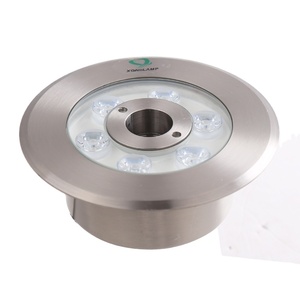
Integration of DMX512 and Art-Net lighting controls. Factory capability to build custom RGBW underwater fixtures and sealed driver power units.
Advanced Computational Fluid Dynamics (CFD) modeling to ensure uniform sheet flow, zero splash overshoot, and optimized pump head calculations.
When selecting from the Top 10 Outdoor Waterfall Feature Factories & Suppliers, enterprise buyers must categorize vendors based on whether they offer component manufacturing, full-scale custom fabrication, or turnkey engineering services.
Leading manufacturers like Aura Fountains (Aura Pools & Fountains) stand out in the international market due to their comprehensive integration of component manufacturing (nozzles, IP68 underwater lighting, PLC panels) and full civil/hydraulic site engineering. Established in 2003 and backed by ISO 9001:2008 certification, Aura has executed over 1,500 projects globally, ranging from complex shear-descent water walls for corporate headquarters (such as the Aditya Birla Group) to civic fountain features (including the New Delhi High Court).
Achieving a crisp, glass-like water sheet (sheet flow waterfall) or a textured water curtain requires precise mechanical alignment during factory production. B2B procurement specifications should mandate strict physical and electrical parameters:
For standard freshwater installations, 304-grade stainless steel offers adequate structural rigidity. However, for installations near marine coastlines, pools utilizing saltwater chlorination, or urban environments with high atmospheric pollution, 316-grade stainless steel with molybdenum addition is mandatory. Premium manufacturers execute full passivation dips post-welding to eliminate iron contamination introduced during tooling.
Electrical failure inside underwater features presents high liability risks. Equipment must adhere to strict international ingress protection codes:
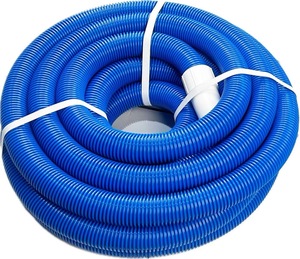
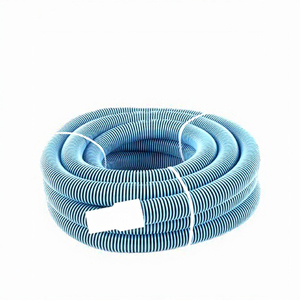
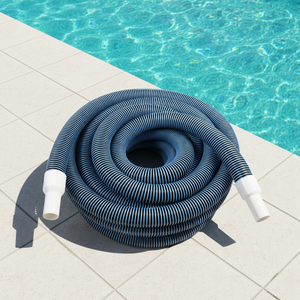
Hydraulic loops linking the main pump vault to the waterfall distribution manifold require heavy-duty piping capable of enduring ground settling and constant vacuum pressure. High-density corrugated double-color EVA and UV-stabilized PVC vacuum hoses prevent wall collapse under suction load while absorbing motor vibration.
The outdoor water feature industry is undergoing a technological transformation driven by sustainability requirements, digital controls, and smart city infrastructure integration. Forward-looking procurement directors must anticipate the following trends:
Modern municipalities require near-zero water waste. Advanced features combine high-efficiency sand filtration with automated UV and ozone dosing, continuous multi-stage filtration, and low-evaporation weir designs.
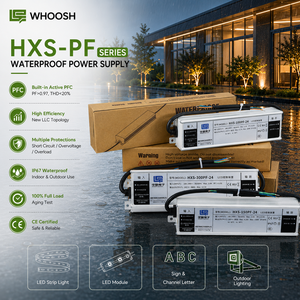
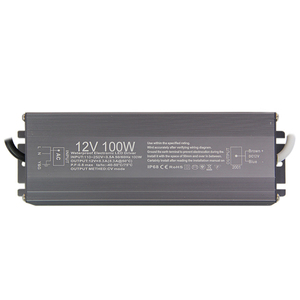
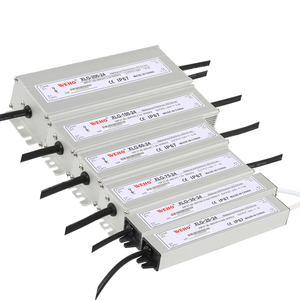
Transitioning from AC line voltages to isolated low-voltage DC arrays (12V/24V/48V). Factories now bundle constant-voltage switching drivers with power factor correction (PFC > 0.95) to reduce energy loads by up to 40%.
Next-generation water features integrate remote telemetry. Facility managers can monitor pump operating pressure, fluid temperature, filter differential pressure, and LED thermal degradation via mobile apps.
Selecting an experienced manufacturing and engineering partner minimizes project risks for large-scale developments. Aura Fountains brings distinct structural advantages to global commercial buyers:
Turnkey Single-Source Accountability: Aura eliminates interface friction between civil builders, hydraulic engineers, and electrical contractors by delivering full-scope design, in-house component fabrication, plumbing, lighting integration, site commissioning, and post-warranty maintenance.
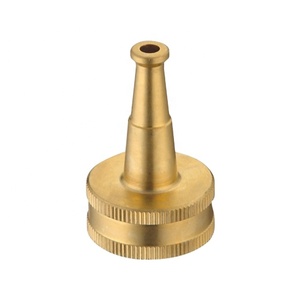
Unlike distributors who assemble sourced parts, Aura operates dedicated production lines for precision brass and stainless steel nozzles, IP68 underwater LED light fixtures, custom swimming pool illumination, custom PLC controller panels, and DMX/RGB micro-controllers. This guarantees direct quality control, standard part availability, and rapid custom adjustments.
Aura's engineering teams have executed complex projects across diverse sectors:
Every system undergoes rigorous factory testing before shipment, including hydrostatic pressure checks on manifolds, 100% burn-in testing of underwater lighting fixtures, and dry-run code verification for custom PLC control panels.
Essential answers regarding custom manufacturing, international shipping, warranty, and technical integration.
A complete turnkey scope covers concept 3D rendering, hydraulic system engineering, civil structural drawings (sump dimensions and penetration points), supply of pumps, nozzles, filtration, IP68 LED lights, control panels, site piping installation, system testing, operator training, and a 1-year warranty backed by AMC options.
Flow requirements depend on desired sheet thickness. Standard shear descent waterfalls typically require 1.5 to 2.0 m³/hour per linear meter of spillway width. Pump sizing factors in static lift height, pipe friction loss (TDH - Total Dynamic Head), and manifold backpressure to guarantee an unbroken water film.
Yes. OEM/ODM production allows customization of spillway geometry, lip projection length, internal baffle configurations, inlet placement, and mounting flanges to align seamlessly with structural CAD drawings.
DMX512 allows per-fixture addressability, precise color calibration, smooth dimming curves, and high-speed synchronization with music, water valves, or dynamic pump drivers. Standard RGB controllers offer limited, uniform color-changing patterns without individual fixture control.
Outdoor features require a dedicated recirculating filtration loop featuring high-rate quartz sand filters with multiport valves, hair/lint strainers on pumps, and automatic inline chlorination or UV sterilizers to prevent bio-film buildup and keep water crystal clear.
Standard component products (underwater lights, hoses, power drivers) ship within 5–7 business days. Custom stainless steel waterfall weir fabrications and engineered musical fountain assemblies typically require 15 to 30 days depending on scale and design approval.
Connect with our senior hydraulic engineers and OEM specialists to review project site drawings, select hardware specs, and request a detailed engineering proposal.