Combining over two decades of precision hydraulic engineering, automated electronic control assembly, and advanced photolytic reactor fabrication.
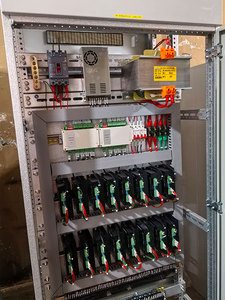
Founded in 2003, our ISO 9001:2008 certified manufacturing campus operates state-of-the-art CNC machining centers, automated UV lamp aging testing bays, and robotic stainless-steel welding lines. Unlike simple trading intermediaries, we execute complete in-house design, hydraulic calculation, control panel assembly, and hydrostatic pressure testing.
Our engineering team has commissioned more than 1,500 commercial projects across public aquatics centers, luxury 5-star hotel pools, competitive Olympic sports complexes, and high-density water parks worldwide.
To guarantee operational longevity under harsh chemical room conditions, our pool UV disinfectors combine top-grade European electronic ballasts, German-made high-purity quartz sleeves, and high-efficiency low-pressure amalgam or medium-pressure UV lamps with our proprietary 316L Stainless Steel / Titanium reactor chambers.
Every UV system engineered in our China factory undergoes rigorous quality inspection, meeting international DIN 19643, NSF/ANSI Standard 50, and CE electro-magnetic safety standards prior to global export.
Understanding germicidal UV-C wavelengths, chloramine destruction dynamics, and pathogen inactivation kinetics for modern aquatic facility design.
Ultraviolet irradiation in the UV-C spectrum—specifically at the monochromatic peak wavelength of 254 nanometers—penetrates the cell wall of pathogenic micro-organisms. The photon energy is absorbed by the pyrimidine bases of microbial DNA and RNA (specifically thymine and cytosine), triggering the formation of pyrimidine dimers.
This photochemical alteration alters the double-helix structure, effectively disrupting cell replication and rendering chlorine-resistant pathogens such as Cryptosporidium parvum, Giardia lamblia, and Legionella pneumophila completely non-viable within seconds without adding chemical residual to the pool water.
Log-4 (99.99%) Inactivation Target: According to US EPA UVDGM specifications, a UV-C dose of 40 mJ/cm² (400 J/m²) provides verified 4-log reduction of Cryptosporidium oocysts, safeguarding public health against waterborne disease outbreaks.
In heavily loaded commercial swimming pools, free chlorine reacts with bather-introduced organic nitrogen compounds (urea, sweat, creatinine) to form combined chlorine, predominantly monochloramine (NH₂Cl), dichloramine (NHCl₂), and trichloramine (NCl₃ / Nitrogen Trichloride). Trichloramine is the primary volatile compound responsible for pungent "pool smell", ocular irritation, respiratory distress in swimmers, and severe indoor building corrosion.
Medium-Pressure UV (MPUV) lamps emit a broad polychromatic light spectrum ranging between 200nm and 400nm. Specific spectral bands photolyze distinct chloramine species:
By implementing a custom-engineered China Pool UV Disinfector, commercial facility operators consistently maintain combined chlorine levels below 0.2 ppm (mg/L), drastically improving indoor air quality and extending building structural lifespans.
| Performance Parameter | Chlorine-Only Dosing | Low-Pressure Amalgam UV | Medium-Pressure UV (MPUV) | UV/O3 Hydroxyl AOP System |
|---|---|---|---|---|
| Primary Target Wavelength | Chemical Reaction | 254 nm (Monochromatic) | 200 nm – 400 nm (Polychromatic) | 254 nm + 185 nm (VUV) / Ozone |
| Cryptosporidium Inactivation | Extremely Slow (>10 hrs) | Rapid (<2 sec) | Rapid (<1 sec) | Instantaneous |
| Combined Chlorine (NCl₃) Destruction | No (Causes Accumulation) | Moderate (Requires High Dose) | Superior Photolysis | Complete Oxidation |
| Lamp Lifespan (Operating Hours) | N/A | 12,000 – 16,000 Hours | 4,000 – 8,000 Hours | 12,000 Hours |
| Energy Density & Footprint | N/A | Medium / Multi-lamp vessel | Ultra-Compact / High Power | Medium Vessel + Injector |
| Chemical Savings (Chlorine / Acid) | Baseline (100%) | 30% – 50% Reduction | 40% – 60% Reduction | 60% – 80% Reduction |
Key technological evolutions driving decision-making for international distributors, EPC contractors, and aquatic engineers through 2026 and beyond.
Legacy UV systems operate lamps at 100% constant power regardless of bather load, leading to excessive energy consumption and thermal stress during off-peak hours.
Modern B2B procurement focuses on smart UV disinfectors equipped with integrated UV Transmittance (UVT) sensors, electro-optical intensity meters, and Modbus/BACnet PLC controllers. Systems automatically modulate lamp output (from 30% to 100%) based on real-time water clarity and circulation flow, cutting annual power expenditure by up to 45%.
Commercial pool buyers are shifting away from traditional low-pressure mercury lamps toward high-output Amalgam UV technology. Amalgam lamps offer three times the UV power density per unit length while maintaining stability across water temperatures ranging from 4°C to 40°C.
With lamp operating lifetimes extending up to 16,000 hours, commercial operators significantly reduce ongoing replacement maintenance costs and quartz sleeve fouling.
Scaling, calcium deposition, and bio-film build-up on quartz sleeves degrade UV light penetration. Sourcing trends prioritize UV reactors equipped with motorized automatic quartz sleeve wipers (ring-type Teflon or SS316 wipers).
Controlled by programmable intervals, these auto-wipers clear sleeve surfaces automatically without system shutdown or manual chemical acid cleaning.
For saltwater pools, thermal spa resorts, and high-salinity aquatic parks, conventional 304 stainless steel fails rapidly due to chloride pitting corrosion. Overseas importers now demand Titanium Reactor Chambers or electropolished 316L Stainless Steel vessels passivated against aggressive saline environments.
Engineers and general contractors prefer pre-assembled, skid-mounted disinfection systems incorporating UV vessels, electrical control panels, bypass manifolds, flow meters, and chemical dosing pumps on a single frame. This reduces site labor costs and installation errors during municipal project execution.
How next-generation engineering is elevating water purity, eco-friendliness, and operational durability.
While mercury-based lamps remain dominant for high-flow commercial installations (>100 m³/h), solid-state UV-C LED technology is advancing rapidly. Emerging deep-UV LEDs eliminate mercury contamination risks, provide instant ON/OFF switching without warm-up delays, and feature customizable wavelength outputs tailored precisely to pathogen DNA absorption spikes.
Our China R&D team is pioneering hybrid UV-C LED modules for residential pools, hydrotherapy spas, and specialized splash pads.
Standard UV disinfection relies solely on direct photon absorption within the reactor chamber. Advanced Oxidation Processes (AOP) generate non-selective Hydroxyl Radicals (•OH)—one of the most powerful chemical oxidants known (oxidation potential 2.80V).
By coating reactor walls with Nano-Titanium Dioxide (TiO₂) photocatalysts or combining UV with micro-ozone injection, AOP systems instantly destroy pharmaceutical residues, sunscreens, personal care products, and chloramines, producing crystal-clear water with minimal chemical additions.
Detailed technical answers to common procurement, sizing, installation, and maintenance questions.
Sizing a commercial pool UV system requires determining three core parameters: Peak Circulation Flow Rate (m³/h or GPM), UV Transmittance (UVT %) of the water, and the required Target UV Dose (mJ/cm²).
For standard public pools, the baseline target dose is 36 mJ/cm² to 40 mJ/cm² at the end of lamp life (EOLL). For example, if a commercial competition pool has a pump flow rate of 150 m³/h and water UVT is assumed at 95%, the reactor must be hydraulically modeled to ensure every fluid parcel receives at least 40 mJ/cm² dose across the chamber. Contact our engineering desk with your pump curves for automated CFD sizing reports.
Low-Pressure Amalgam UV systems emit a single monochromatic wavelength at 254nm. They are highly energy-efficient (up to 40% electrical-to-UV conversion efficiency) and ideal for disinfection and basic combined chlorine reduction in outdoor pools or smaller indoor facilities.
Medium-Pressure UV systems emit polychromatic light (200nm - 400nm) under higher pressure and temperature. While consuming more power per lamp, MPUV systems possess far higher energy density, allowing a single compact chamber to process massive flow rates (>500 m³/h). MPUV is superior for destroying all three chloramine species (mono-, di-, and tri-chloramines) in high-bather indoor aquatic centers.
A full turnkey export scope covers: customized 3D CAD hydraulic system design, 316L/Titanium reactor vessel fabrication, high-purity quartz sleeves, premium UV lamps, electronic ballasts, IP65/IP66 control cabinet with PLC/HMI interface, inline optical UV sensors, automated wiper mechanism, pre-shipment hydrostatic pressure testing (up to 10 bar), export wooden crating, complete O&M manuals, and a comprehensive 1-year factory warranty with optional Annual Maintenance Contract (AMC) spare parts packages.
High-output Low-Pressure Amalgam lamps operate effectively for 12,000 to 16,000 hours (approximately 1.5 to 2 years of continuous operation). Medium-Pressure UV lamps generally require replacement between 4,000 and 8,000 hours depending on ignition cycles.
Quartz sleeves should be inspected quarterly and wiped automatically or manually. Sleeves typically last 3 to 5 years before solarization (UV-induced glass degradation) reduces transmittance below acceptable thresholds.
No. UV disinfection is a primary "point-of-passage" treatment that inactivates pathogens and destroys chloramines inside the reactor chamber. However, because UV leaves no chemical residual in the main pool tank, municipal health codes mandate maintaining a low secondary residual of free chlorine (typically 0.5 – 1.0 ppm) to protect bathers against cross-contamination in the pool basin.
Installing UV allows operators to reduce chlorine usage by 40% to 60% while eliminating chemical odors and irritation.
Our reactor vessels are engineered using Computational Fluid Dynamics (CFD) software to minimize internal head loss. Under rated flow conditions, hydraulic head loss across our standard inline UV chambers is maintained below 0.2 bar (2.9 PSI), ensuring existing circulation pumps do not suffer excessive backpressure or flow degradation.
Yes. As a direct China manufacturer, we specialize in OEM and ODM partnerships. We can customize chamber dimensions, inlet/outlet flange standards (ANSI, DIN, JIS), control panel branding, PLC firmware languages, and stainless-steel finish (mirror polished, electro-polished, or powder-coated) according to your brand's specifications.
All UV systems are packed in ISPM-15 compliant export wooden crates to prevent transport damage. We provide full FOB, CIF, or DDP shipping terms globally. For technical support, our engineering team offers remote commissioning guidance, PLC software diagnostic support, video troubleshooting, and express air-freight shipment for consumable spare parts (lamps, sleeves, ballast boards).
Whether you are designing a new commercial aquatic park, retrofitting a hotel pool, or seeking an experienced OEM manufacturing partner for custom UV reactors, our engineering team is ready to deliver tailored technical proposals and factory-direct pricing within 24 hours.