Explore our export-grade filtration equipment, smart controllers, underwater lighting, and hydraulic components manufactured to rigorous international standards.
Modern commercial swimming pool engineering demands strict adherence to fluid dynamics, water clarity metrics (NTU turbidity reduction), and sustainable operational expenditures (OpEx). As China's leading pool sand filter manufacturer and global exporter, our engineering facility combines continuous bobbin-wound fiberglass technology, automated resin impregnation, and fluid-dynamically optimized lateral collector distribution to yield high-efficiency pressure sand filters.
A sand filter serves as the core mechanical treatment unit within any aquatic recirculation system. Operating on the principle of depth filtration, raw water passes downward through a graded bed of media—traditionally silica sand or advanced Activated Filtration Media (AFM)—trapping suspended solids, organic debris, and colloidal particles down to 5–10 microns. The structural integrity of the filter vessel, backwash hydraulic velocity, and internal distributor hydraulics dictate system longevity and overall energy performance.
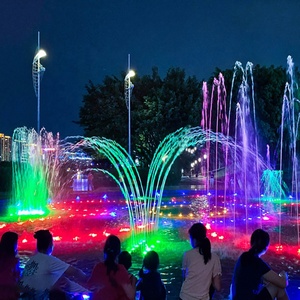
Selecting the optimal filtration vessel architecture depends directly on flow rate capacity, physical plant layout, turnover time requirements, and water body type (e.g., Olympic public pools, luxury resort infinity edge pools, hydrotherapy Jacuzzis, or large-scale musical fountains).
| Filter Vessel Class | Structural Composition | Max Flow Rate ($m^3/h$) | Typical Working Pressure | Primary Commercial Application |
|---|---|---|---|---|
| Side-Mount Commercial Sand Filter | Bobbin-wound fiberglass with UV-resistant gelcoat | 15 – 120 $m^3/h$ | 2.5 bar / 3.5 bar (Custom 4.0) | Luxury Hotels, Commercial Aquatics, Resorts |
| Top-Mount Residential Sand Filter | High-Density Polyethylene (HDPE) / Reinforced FRP | 4 – 35 $m^3/h$ | 2.0 bar / 2.5 bar | Private Residential Pools, Compact Jacuzzis |
| Horizontal Commercial Vessel | Dual-layer Bobbin Filament Wound FRP / Carbon Steel | 100 – 350 $m^3/h$ | 2.5 bar / 4.0 bar | Water Parks, Municipal Aquatics, Oceanariums |
| Deep-Bed Industrial Sand Filter | High-depth FRP with 1.2m – 1.5m filter media bed | 10 – 80 $m^3/h$ | 3.5 bar / 5.0 bar | Industrial Water Recycling, High-load Features |
Utilizes continuous mechanical filament winding to distribute tensile stresses uniformly, eliminating weak seams and preventing structural fatigue under heavy backwashing cycles.
Lined with chemical-grade resin systems resistant to high chlorination levels, salt-water chlorination (salinity up to 35,000 ppm), ozone off-gas, and acidic pH flushes.
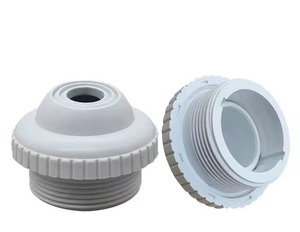
Engineered 6-way ABS/PVC multiport control valves equipped with ergonomic lever handles, heavy-duty neoprene gaskets, and sight glass backwash indicators for zero-leak reliability.
The efficiency of a pool sand filter relies heavily on the filtration velocity ($v = Q / A$, where $Q$ is flow rate in $m^3/h$ and $A$ is filter bed area in $m^2$). Commercial engineering standard EN 16713 and NSF/ANSI 50 define recommended filtration velocities:
Global procurement teams are rapidly shifting from standard quartz silica sand to recycled, bio-resistant glass media due to superior life-cycle cost efficiency and bio-film prevention.
| Filtration Parameter | Graded Silica Sand (0.4–0.8mm) | Activated Glass Media (AFM) | Natural Zeolite Media |
|---|---|---|---|
| Nominal Micron Rating | 20 – 30 Microns | 4 – 5 Microns (Without Flocculant) | 3 – 5 Microns |
| Biofilm Formation Risk | High (Requires frequent chemical shocking) | Zero (Self-sterilizing catalytic surface) | Moderate (Porous structure retains organics) |
| Backwash Water Consumption | Baseline (100%) | Reduced by 45% – 50% | Reduced by 20% – 30% |
| Media Service Lifespan | 3 – 5 Years | 15+ Years (Degradation-resistant) | 5 – 7 Years (Requires salt recharge) |
| Ammonia / Combined Chlorine Absorption | Negligible | High Catalytic Surface Attraction | Exceptional Ion-Exchange (Absorbs $NH_4^+$) |
As international commercial developers, MEP (Mechanical, Electrical, Plumbing) contractors, and resort operators evaluate their long-term supply chain partnerships, several key macro trends are shaping the procurement landscape for pool sand filters and water treatment equipment exported from China.
Rising energy costs worldwide have pushed manufacturers to optimize internal hydraulic resistance (head loss). Modern filter design incorporates hydraulically balanced lateral arms and smooth internal geometry, reducing pressure drop across the bed by up to 25%. When paired with Variable Speed Pumps (VSP), filtration can be run at lower speeds during off-peak hours, cutting electrical energy draw by up to 70% while improving particle capture rates.
Manual 6-way valve adjustment is being phased out in commercial installations in favor of automated electric or pneumatic multi-port valve manifolds. These smart systems monitor differential pressure ($\Delta P$) across the filter bed. Once head loss exceeds 0.5 – 0.8 bar, the controller automatically triggers a backwash and rinse cycle, preventing human error, maintaining continuous sanitation, and safeguarding filter vessels from over-pressurization.
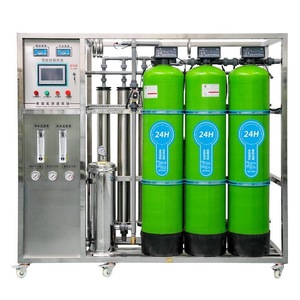
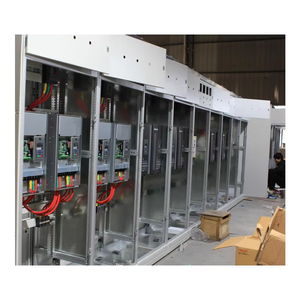
Global engineering projects demand turnkey solutions. Factory-assembled modular filtration skids—integrating bobbin-wound sand filters, automated chemical dosing pumps, commercial UV sterilizers, and PLC control cabinets—are increasingly requested. These pre-plumbed, factory-tested skids drop directly onto project sites, reducing local installation labor costs by over 60% and eliminating field assembly errors.
Combining two decades of manufacturing mastery with state-of-the-art automated machinery, we deliver certified reliability for project developers, distributors, and engineering contractors worldwide.
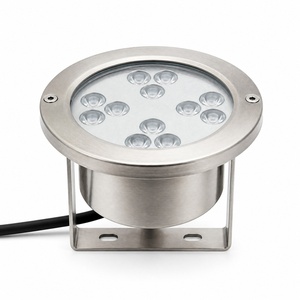
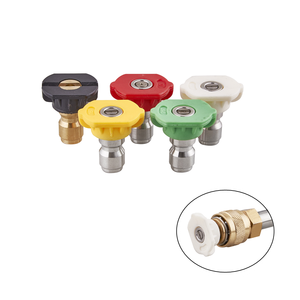
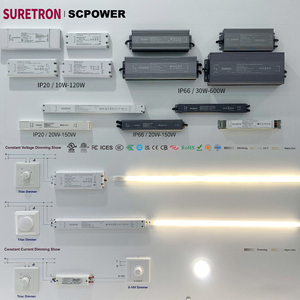
We operate full in-house production lines for fiberglass filament winding, ABS/PVC injection molding for multiport valves, precision CNC machining for stainless steel fountain nozzles, and automated SMD assembly for underwater LED drivers.
Every single filter vessel undergoes rigorous hydrostatic pressure testing at 1.5 times its rated working pressure prior to packaging and shipment, guaranteeing zero structural defects or seal leaks upon arrival on site.
Our team of hydraulic engineers, chemical specialists, and CAD designers regularly collaborate with international architectural firms to engineer custom tank dimensions, color gelcoats, connection flanges (ANSI/DIN/BS), and customized brand labelling.
With 1,500+ projects successfully delivered across Southeast Asia, Europe, the Middle East, South Asia, and the Americas, our logistics team manages containerized sea freight, customs documentation, and post-sale technical support seamless for international buyers.
To ensure high water clarity and maintain regulatory compliance, mechanical engineers must calculate the required filter surface area correctly. Below is the standardized formula utilized by our engineering team:
Step 1: Calculate Required Flow Rate ($Q$)
$$Q (m^3/h) = \frac{\text{Total Pool Volume } (m^3)}{\text{Required Turnover Time } (Hours)}$$
Step 2: Calculate Required Filter Area ($A$)
$$A (m^2) = \frac{Q (m^3/h)}{\text{Target Filtration Velocity } (m^3/h/m^2)}$$
Standard Turnover Time Guidelines:
Technical guidance for global importers, MEP contractors, distributors, and project owners.
Request technical datasheets, full CAD drawings, factory price lists, or custom project quotations directly from our engineering sales office.