
+91 99994 28905 / +91 98731 30400 [email protected]
0%

Choosing a hydrotherapy jacuzzi is not only about jets, heat, or attractive showroom lighting. Hydrotherapy Jacuzzi Installation also involves structure, drainage, ventilation, electrical planning, access, and long-term maintenance. A beautiful unit can become a poor investment when technicians cannot reach its pump or filters.

This guide examines ten practical installation options, including indoor rooms, outdoor decks, sunrooms, recessed platforms, portable units, and accessibility-focused layouts. Each option creates different demands. Concrete must support the filled weight. Floors need dependable drainage. Electrical connections should be assessed by qualified professionals. Humidity requires attention, especially in enclosed spaces.

Dr. Bruce E. Becker, a respected aquatic rehabilitation specialist, stated, “Water supports the body and reduces the effects of gravity.” That principle explains the appeal of hydrotherapy, but installation quality determines whether users receive its intended benefits. Warm water should feel controlled, not overwhelming. Steps should feel stable beneath wet feet. Service panels should remain reachable, even after landscaping or cabinetry is completed.

No option is perfect. That matters.

A compact indoor installation may improve privacy but require stronger moisture control. An outdoor jacuzzi may offer easier ventilation but face weather, debris, and seasonal temperature changes. Some recommendations may also change after a site inspection. Soil conditions, household routines, and user mobility are easy to underestimate.

The following comparison focuses on realistic choices, installation experience, professional guidance, reliable safety practices, and honest limitations. It aims to help homeowners ask better questions before selecting a Hydrotherapy Jacuzzi Installation that fits both their space and daily needs.
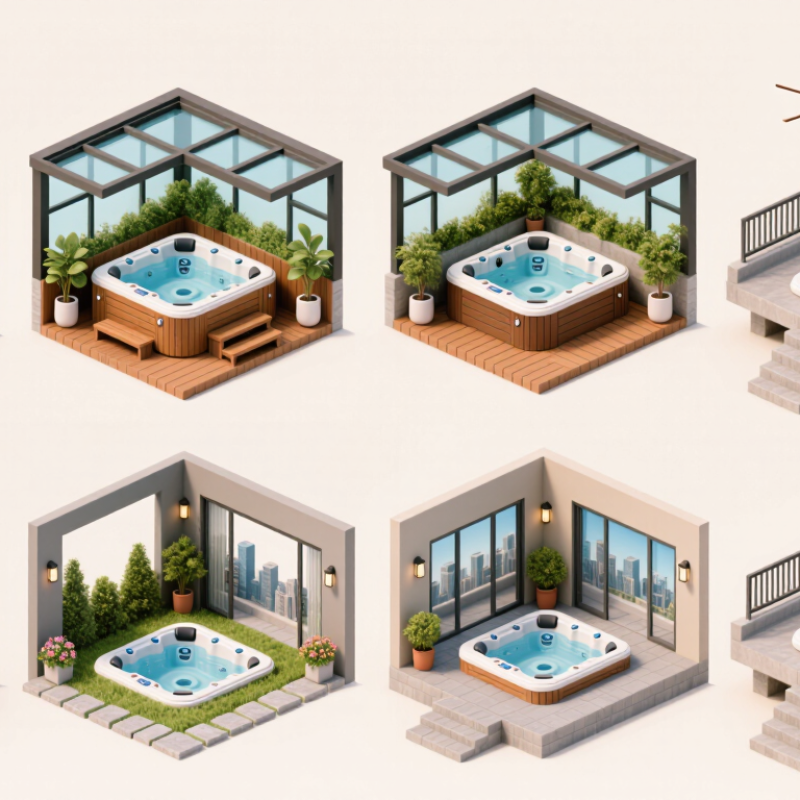
What Are the Top 10 Hydrotherapy Jacuzzi Installation Options?

Assessing Space, Budget, and Hydrotherapy Jacuzzi Requirements

Choosing among the top 10 hydrotherapy Jacuzzi installation options starts with the room, not the shell. Practical choices include an indoor unit, outdoor patio unit, deck installation, sunken design, corner model, portable unit, custom built-in system, swim-spa layout, rooftop installation, and a compact bathroom conversion. Indoor placement needs strong ventilation, floor drainage, and structural review. A rooftop or deck unit needs a certified engineer to check load capacity. Water is heavy; one cubic metre weighs about one metric tonne.

Budget decisions should include delivery access, electrical work, plumbing, insulation, maintenance, and future repairs. The Pool & Hot Tub Alliance reports that installation complexity can significantly affect ownership costs, especially when excavation or structural reinforcement is required. The Global Wellness Institute valued the global wellness economy at $6.3 trillion in 2023, showing strong demand for home wellness spaces. Still, market enthusiasm can hide practical overspending. A smaller corner installation may provide better value than a dramatic sunken design.

Hydrotherapy requirements also differ. Deep seating supports shoulder-level immersion, while adjustable jets suit users with changing comfort needs. The CDC advises keeping hot tub water at or below 104°F (40°C). Ventilation matters indoors. Slip-resistant flooring matters everywhere. Local electrical and building requirements should guide the final design. My early budget is often too optimistic when access is narrow. Measure doorways, stair turns, and service clearances before ordering. Leave room for filters, pumps, and safe maintenance. A beautiful installation that cannot be serviced is a costly mistake.

Top 10 Hydrotherapy Jacuzzi Installation Options

Comparison of typical planning budgets and minimum usable area, including service access and user clearance. Costs are estimated residential installation ranges in USD and may vary by site conditions, finishes, plumbing, electrical work, and structural requirements.

Planning insight: Plug-in and compact indoor options require the least space and budget, while swim spas, rooftop installations, and custom indoor systems demand substantially more clearance, structural planning, and installation work.

Comparing Indoor, Outdoor, Above-Ground, and In-Ground Installations

Hydrotherapy Jacuzzi installation begins with the site, not the shell. Ten practical options include an indoor floor-level unit, sunroom installation, basement installation, patio placement, deck placement, rooftop placement, ground-level slab, freestanding above-ground placement, partially recessed placement, and fully in-ground installation. Indoor rooms offer year-round privacy, but moisture quickly damages walls without mechanical ventilation. The CDC recommends keeping hot-tub water at or below 104°F. ASHRAE ventilation guidance also supports controlling humidity and replacing damp air. Outdoor patios simplify drainage and servicing. Decks feel inviting, yet structural loading needs professional verification. Rooftops demand even stricter engineering. Access matters.

Above-ground units usually reduce excavation, construction time, and repair difficulty. Partially recessed designs improve visual integration while preserving access panels. Fully in-ground installations look refined, but they need careful waterproofing, drainage, electrical planning, and future lifting access. A beautiful installation can become expensive when technicians cannot reach the equipment. That mistake is common. PHTA standards emphasize safe electrical bonding, slip-resistant surfaces, and clear maintenance access. Local requirements still control the final design.

Tips: Place the equipment near a service path. Leave removable panels unobstructed. Test the supporting slab before delivery. For indoor units, add a floor drain, vapor-resistant finishes, and humidity monitoring. Outdoor installations benefit from wind screening, shade, and a nearby rinse point. Do not assume a reinforced deck is automatically suitable. A licensed structural professional should confirm its capacity.

What Are the Top 10 Hydrotherapy Jacuzzi Installation Options? — Comparing Indoor, Outdoor, Above-Ground, and In-Ground Installations
Rank Installation Option Typical Location Structure and Support Typical Capacity Approximate Installation Time Site Preparation Weather Protection Relative Upfront Cost Main Advantages Important Considerations
1 Outdoor Above-Ground on a Concrete Slab Garden, patio, or backyard Factory-built spa placed on a level, reinforced concrete base 2–7 adults 1–3 days after the base and utilities are ready Level slab, drainage, electrical connection, and service clearance Moderate; requires a fitted cover and may benefit from a shelter Low to medium Usually the simplest installation; easy equipment access; flexible placement Visible cabinet height; the slab must support the filled weight and occupants
2 Outdoor Above-Ground on a Reinforced Deck Raised deck, terrace, or platform Deck structure engineered for the filled spa load 2–6 adults 2–7 days, depending on structural work Structural review, waterproofing, drainage, and safe access stairs Moderate to high depending on cover and enclosure Medium to high Improves views and access; can integrate with outdoor living areas Water weighs approximately 1 kilogram per liter before adding the spa and occupants; professional structural verification is essential
3 Outdoor Partially Recessed Installation Patio edge, garden, or retaining-wall area Part of the cabinet is below grade while the service side remains accessible 2–7 adults 3–10 days Excavation, retaining support, drainage, waterproofing, and access panels Moderate; wind protection is usually improved Medium to high Lower visual profile while retaining comparatively practical maintenance access Poor drainage can cause moisture damage; excavation must not undermine nearby foundations
4 Outdoor Fully In-Ground Installation Landscape, pool surround, or custom spa terrace Custom cavity with a reinforced base, drainage system, and retaining structure 2–8 adults 1–3 weeks for a prepared site Excavation, structural support, waterproofing, drainage, utilities, and removable service access High when paired with a cover or enclosure High Seamless appearance; easy integration with hardscape and landscape design Highest construction complexity; pumps, controls, and plumbing must remain serviceable
5 Indoor Floor-Standing Installation Dedicated wellness room, bathroom, or large sunroom Spa rests on a finished structural floor with surrounding clearance 2–7 adults 1–3 days after room preparation Moisture-resistant finishes, floor drainage, ventilation, electrical supply, and access route Excellent; protected from rain, wind, and freezing conditions Medium Year-round use; stable water temperature; convenient privacy and accessibility High humidity can cause condensation, mold, and building damage without mechanical ventilation
6 Indoor Recessed or Sunken Installation Custom spa room, basement, or indoor pool area Spa is lowered into a purpose-built platform or recessed floor opening 2–7 adults 1–4 weeks Structural design, waterproofing, vapor control, drainage, ventilation, and removable panels Excellent High Clean architectural appearance; reduced step-in height; strong privacy More difficult to remove or replace; access for repairs must be designed before construction
7 Indoor Custom Built-In Installation Luxury bathroom, hydrotherapy suite, or private wellness room Custom surround or tiled structure built around the spa shell 2–8 adults 2–6 weeks Detailed waterproofing, vapor management, drainage, ventilation, electrical work, and finish construction Excellent High Maximum design flexibility; can coordinate with seating, lighting, and therapeutic features Construction tolerances and service access are critical; remodeling costs are usually substantial
8 Rooftop or Terrace Above-Ground Installation Flat roof, rooftop terrace, or elevated urban deck Engineered platform or existing structure verified for concentrated loads 2–5 adults 1–3 weeks, excluding structural approvals Load assessment, waterproofing, wind protection, drainage, lifting logistics, and dedicated utilities Low to moderate; exposed locations need wind and temperature protection High Uses limited ground space; offers elevated views and privacy from surrounding properties Filled weight, wind uplift, delivery access, and roof warranty requirements must be professionally assessed
9 Outdoor Swim Spa or Long-Format Hydrotherapy Spa Backyard, pool deck, or large wellness terrace Large factory-built unit installed on a reinforced slab or engineered platform 2–8 adults, depending on layout 2–5 days after foundation completion Heavy-load foundation, delivery route, electrical service, drainage, and equipment clearance Moderate; insulated cover is strongly recommended High Combines hydrotherapy seating with exercise or longer water-flow zones Requires more space, higher fill volume, stronger structural support, and greater energy management
10 Low-Profile Accessibility-Focused Installation Indoor or outdoor location near the main living area Low-rise base, broad steps, handrails, transfer points, and stable surrounding surfaces 1–6 adults 2–7 days, depending on access modifications Non-slip surfaces, suitable turning space, handrails, lighting, drainage, and accessible controls Depends on whether the installation is indoors or outdoors Medium to high Supports safer entry and exit; suitable for users with limited mobility Accessibility features should be planned with user needs, local regulations, and professional advice in mind
Planning note: Installation time and cost vary by spa size, local construction requirements, electrical capacity, delivery access, climate, drainage conditions, and the need for structural or building permits. A filled hydrotherapy spa can weigh several thousand kilograms, so the supporting structure should be assessed by a qualified professional.

Evaluating Portable, Modular, Swim Spa, and Custom-Built Options

Choosing among the top 10 hydrotherapy Jacuzzi installation options depends on space, access, budget, and daily use. Inflatable portable models suit renters and temporary setups, but their insulation and massage pressure can be limited. Plug-in portable units install quickly near a suitable power supply. Hard-shell portable spas offer stronger seating and better insulation. Modular spas allow sections to pass through narrow doors before assembly. They are practical for renovated homes.

Semi-recessed installations reduce the climbing height while preserving access for maintenance. Fully in-ground spas create a clean, architectural appearance, but excavation, drainage, and structural reinforcement require careful planning. Deck-integrated units can feel natural beside a garden, although the deck must support the filled weight. Indoor installations provide year-round privacy, yet humidity control becomes essential. Swim spas combine exercise lanes with hydrotherapy seats and need considerable floor space. Custom-built systems offer the best fit for unusual rooms, slopes, or accessibility needs.

A site inspection should measure doorways, service clearances, drainage routes, and the loaded floor capacity. Water can weigh more than expected. A qualified electrician should verify circuit protection and bonding before filling the tub. I have seen attractive installations fail because technicians could not reach the pump afterward. That mistake is expensive. Portable models seem easier, but uneven ground can stress the shell and create uncomfortable seating. Custom work sounds ideal, though it can invite design changes and rising costs. Written specifications, maintenance access, and realistic energy estimates make the final choice more reliable.

Planning Foundations, Plumbing, Electrical Systems, and Drainage

Hydrotherapy Jacuzzi planning starts below the waterline. The best installation depends on the foundation, service routes, electrical capacity, and drainage path. Ten practical configurations deserve attention. A reinforced concrete slab offers lasting stability. A raised timber platform can improve access, but it needs structural engineering. A recessed pit creates a clean profile. An insulated pad suits lighter renovations. A tiled service deck hides equipment while preserving maintenance access.

Plumbing may use a direct stub-out, a nearby manifold, or a dedicated service bay. Short, supported pipe runs reduce heat loss and simplify repairs. A gravity drain works well when floor levels cooperate. A pumped sump helps when the main drain sits higher. A trench drain controls splash water around busy edges. Never seal every access panel. Technicians need room to work.

Electrical planning needs a dedicated circuit, suitable protection, bonding, and weather-resistant enclosures. A qualified electrician should verify load calculations and local requirements. Keep water and power physically separated. Place controls where service staff can reach them without draining the tub. During one renovation, the drain looked adequate on paper, yet overflow reached the doorway. That mistake changed my practice. Test drainage with a full bucket before finishing tile. Check the slab after curing. Small oversights become expensive when the tub is already filled.

Choosing Accessibility Features, Energy Solutions, and Maintenance Access

What Are the Top 10 Hydrotherapy Jacuzzi Installation Options?

Choosing the right installation begins with safe, independent access. Consider a zero-entry route, a wide transfer zone, and slip-resistant paving around the tub. Add sturdy grab rails near the seating edge.

A powered lift can support users with limited strength, while a low-height step may suit others better. Keep controls within reach, even from a seated position. Good lighting matters, especially beside wet surfaces. It is easy to overlook.

Energy planning should balance comfort, climate, and running costs. An insulated shell reduces heat loss during idle periods. A fitted thermal cover helps retain warmth overnight.

A variable-speed pump can lower energy use during filtration. Solar-ready controls may connect future renewable power systems. Ask the installer to calculate expected consumption for your water temperature and usage pattern. Estimates can be imperfect.

Maintenance access is the tenth option, but it should not be treated as an afterthought. Leave a clear service corridor beside the equipment cabinet. Use removable panels instead of sealed structures around pumps and heaters.

Install drainage points where accidental overflow can be controlled. Place filters where an adult can reach them without leaning across the water.

A licensed installer should verify electrical protection, structural support, ventilation, and local safety requirements. Practical site experience often reveals problems that drawings miss.

FAQS

What installation options suit a hydrotherapy tub?

Options include indoor, patio, deck, rooftop, above-ground, recessed, and in-ground installations. A compact bathroom conversion may also work. Access matters. Choose the site before selecting the tub.

Is an indoor installation practical?

Indoor placement offers privacy and year-round use. It needs mechanical ventilation, floor drainage, moisture-resistant finishes, and humidity monitoring. Keep damp air moving away from walls and ceilings. A floor drain is essential.

What should I check before installing on a deck or rooftop?

A licensed structural professional should verify the supporting structure. Water is extremely heavy. One cubic metre weighs about one metric tonne. Check the deck, slab, doorway, stair turns, and delivery route. Do not assume reinforcement guarantees safety.

How do above-ground and in-ground installations differ?

Above-ground units usually need less excavation and fewer construction changes. They also allow easier equipment access. In-ground designs look integrated but require waterproofing, drainage, and lifting access. A hidden equipment panel can become a repair problem.

What should the installation budget include?

Include delivery, electrical work, plumbing, insulation, drainage, maintenance, and future repairs. Narrow access can increase labor costs. My early estimate may be too optimistic. Measure service clearances before ordering.

What hydrotherapy features should I consider?

Deep seating can support shoulder-level immersion. Adjustable jets allow different comfort settings. Keep water temperature at or below 104°F, or 40°C. Controls should remain reachable from a seated position. Comfort needs vary.

Which accessibility features improve safe use?

Consider a zero-entry route, wide transfer space, grab rails, and slip-resistant paving. A powered lift may support users with limited strength. A low step may suit other users. Add clear lighting near wet surfaces. Small details matter.

How can I reduce energy use?

Use an insulated shell and a fitted thermal cover. A variable-speed pump may reduce filtration energy use. Solar-ready controls can support future renewable systems. Ask for consumption estimates based on temperature and usage. Estimates can be imperfect.

How should maintenance access be planned?

Leave a clear corridor beside the equipment cabinet. Use removable panels around pumps and heaters. Position filters where an adult can reach them safely. Add controlled drainage for accidental overflow. A beautiful installation is not enough.

Conclusion

Choosing the right Hydrotherapy Jacuzzi Installation begins with a careful review of available space, budget, household needs, and desired wellness features. Homeowners should compare indoor, outdoor, above-ground, and in-ground layouts while considering privacy, climate, visual impact, and long-term convenience. Portable and modular units may suit flexible or smaller spaces, while swim spas and custom-built systems can provide greater capacity and personalized functions.

A successful installation also depends on practical planning. The foundation must safely support the unit, while plumbing, electrical connections, drainage, and water management should be designed for reliable performance. Accessibility features, efficient heating and insulation, secure entry points, and convenient maintenance access can improve comfort and reduce operating demands. By balancing design preferences with structural, technical, and maintenance requirements, property owners can select a hydrotherapy Jacuzzi solution that fits their space, lifestyle, and future needs.

Julian

Julian

Julian is a dedicated marketing professional with a deep understanding of the company’s products, customers, and industry landscape. With a strong combination of strategic insight, market awareness, and clear communication skills, he helps transform complex product information into practical,......