
Choosing a Floating Musical Fountain begins with the site, not the spectacle. A pond that looks spacious from shore may feel crowded once you account for viewing distance, water depth, wind, and access for maintenance. Mark Fuller, co-founder of fountain design firm WET, is a relevant industry reference for choreographed water displays. No source text was provided to verify a direct quotation from him, so this introduction will not invent one. The guiding principle is simple: “Choose for the site, not just the show.”
A well-planned Floating Musical Fountain brings pumps, nozzles, lighting, controls, and audio into one coordinated system. Consider the view from a real visitor’s position: Can people see the full pattern? Will spray drift toward a walkway? Does the soundtrack remain clear beside nearby traffic? These details matter. So does routine care. Filters clog, lamps need replacement, and water conditions can change; a design that ignores these realities may disappoint after opening night.
Compare proposals by more than peak height or nozzle count. Ask for a scaled layout, operating requirements, service access, and a sample show sequence. Request references for installations with similar water conditions and climate. Then check whether the proposed music, lighting, and water movements suit the venue’s audience. There is no perfect specification. Even experienced teams can misjudge wind or sound carry. A careful selection process leaves room to review those assumptions before equipment is ordered.
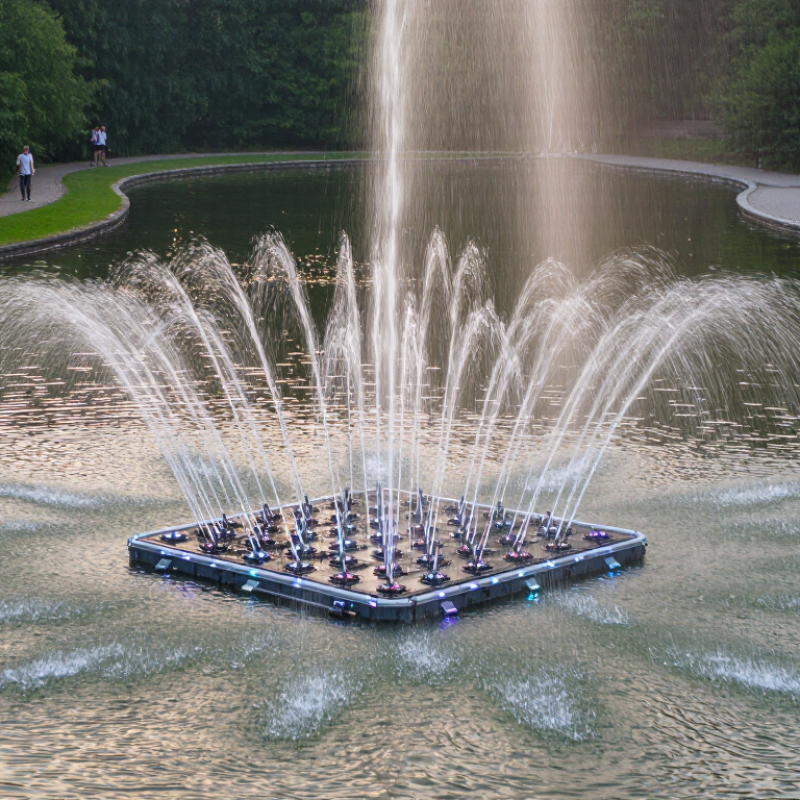
Before choosing a floating musical fountain, measure the pond rather than relying on photos. Note its surface area, shoreline shape, and the distance from the installation point to the bank. Check water depth at several spots, including during dry or low-water periods. The required depth depends on the float, pump intake, and operating setup, so compare site measurements with the equipment specifications. A shallow corner may look suitable but leave too little clearance beneath the unit. Small details matter.
Operating conditions can change how a fountain performs. Wind may push spray toward paths, seating, or nearby buildings, while leaves and algae can block an intake. Watch the pond during different weather, and note seasonal water-level changes. Check how equipment can be reached for inspection, cleaning, and removal. Plan for a stable power connection installed and checked by a qualified professional. If music and lighting are part of the design, confirm that their controls and sound coverage suit the site. It is easy to underestimate maintenance access; a neat-looking location may be awkward to service. Allow room to work safely around the float.
Use pond depth as an initial sizing guide. Deeper water generally provides more room for pump intake clearance, anchoring, and taller displays, while wind exposure and water quality should be checked before final selection.
Indicative planning ranges: confirm the fountain’s actual draft, pump intake requirements, anchoring method, electrical protection, water clarity, and safe operating limits with a qualified installer.
Before choosing a floating musical fountain, define the experience it should create. A calm resort pool may need soft melodies, slow water movement, and warm white lighting. A public celebration may require stronger rhythms, higher jets, and vivid color changes. Write down the desired mood, audience distance, viewing angles, and performance length.
Match the visual effects to the water area. Measure the pool’s length, depth, and available power before selecting equipment. Narrow pools often suit vertical jets, while wide lakes can support layered arcs and moving patterns. The fountain should remain visible from the main viewing zone. Test it at dusk. Daylight can hide subtle lighting, while excessive brightness may erase the shape of the water.
Music and motion must stay synchronized. Ask for adjustable timing, reliable audio control, and smooth transitions between scenes. Water pressure, wind, and changing water levels can affect performance. I have found that impressive height is not always the best choice. Large jets may create noise, spray nearby paths, or lose detail from a distance. A quieter design can feel more precise. One assumption often fails: louder music does not automatically create stronger emotion. Review sample programming, maintenance access, electrical protection, and emergency shutoff features. Leave room for revision. Real sites rarely behave exactly like demonstrations.
A floating fountain should suit the site before its show looks impressive on paper. Check the minimum water depth, platform stability, and distance from shore. Ask how nozzle height changes with wind and pump output. A tall plume can look dramatic, then drift across a walkway. Compare adjustable spray patterns, flow control, and access for cleaning. Small details matter.
Lighting changes how clearly each water shape reads after dusk. Look for adjustable beam angles, dimming, color control, and sealed fixtures rated for wet environments. Narrow beams can define a fine spray; wider beams work better on broad water sheets. Test colors from the actual viewing areas, not just beside the equipment. Blue may look vivid close up and faint across a dark pond. Specs do not tell the whole story.
Audio systems need even coverage without excessive volume. Compare speaker placement, weather protection, control options, and how reliably sound cues stay aligned with lighting and pump changes. Ask for a demonstration using music similar to the planned program. Listen near the shore and at the far end of the audience area. Quiet spots are easy to miss. A common planning mistake is choosing each system separately; one component may overpower the others. Leave room in the schedule for tuning, because a technically correct setup can still feel awkward outdoors.
A floating musical fountain needs a power supply sized for its pumps, lights, and control equipment. Check the rated voltage and total load against the available supply before comparing models. Check the label. Outdoor connections should be protected from moisture, and a qualified electrician can confirm suitable protection and wiring for the site. Keep cables away from boat routes and sharp pond edges. A cable that looks long enough on land may not reach safely once the float shifts.
The control system should match how the fountain will be operated. Check whether it supports timed shows, manual adjustments, and reliable communication from the planned control point. Test the signal across the actual distance; walls, trees, or nearby equipment can interfere.
For safety, confirm the float’s stability, anchoring method, and minimum water depth, especially where wind or changing water levels are common. Plan how staff can isolate power before cleaning or servicing the unit. Installation access is easy to overlook. Leave room for lifting equipment and routine inspection, even if that makes the layout less tidy. A site drawing helps, but it may miss real obstacles such as a sloped bank or a shallow corner.
A floating musical fountain can look simple from shore, but maintenance starts below the waterline. Ask how often pumps, filters, cables, and lighting seals need inspection. A supplier should provide a written service schedule, an accessible parts list, and clear cleaning instructions. Check whether routine work requires divers, a service boat, or a safe way to lift each module. Small details matter.
Ask who diagnoses faults and how quickly support is available during an event season. Remote troubleshooting helps, but it cannot replace hands-on service when a pump clogs or a light fails. Get response times and service fees in writing. That gap can matter. If your staff will handle basic maintenance, request practical training and simple fault guides. A polished demonstration does not show how repairs feel on a rainy Tuesday.
Compare the purchase price with installation, anchoring, power use, winter storage, replacement nozzles, and annual servicing. Ask for estimated energy use at typical show settings, not just maximum output. Confirm warranty exclusions, shipping charges, and future parts availability. A low quote may omit these costs. I would still leave room for uncertainty: weather, water quality, and show hours change wear. Estimates are not promises. Choose a system whose upkeep your staff can realistically manage during busy event weeks.
Compare the rated voltage and total load for pumps, lights, and controls with the site’s available supply. Check the equipment label. Ask a qualified electrician to review outdoor wiring and moisture protection.
Route cables away from boat paths and sharp pond edges. Check their reach after the floating unit shifts, not only from shore. A cable can seem long enough on land.
Check support for timed shows, manual adjustments, and communication from the planned control point. Test the signal across the real distance. Trees, walls, or nearby equipment may interfere.
Confirm float stability, anchoring, and minimum water depth. Allow for wind and changing water levels. Leave room for lifting equipment and inspections. That can make the layout less tidy.
Ask for written inspection schedules, cleaning instructions, and an accessible parts list. Check how often pumps, filters, cables, and lighting seals need attention. Small details matter.
Ask whether staff need a service boat, divers, or a safe way to lift each module. Request practical training and simple fault guides. Rainy-day repairs feel different.
Get response times and service fees in writing. Remote troubleshooting can help, but it may not fix a clogged pump or failed light. I would double-check who handles urgent repairs.
Include installation, anchoring, electricity, winter storage, replacement nozzles, and annual service. Ask for energy estimates at typical show settings. Estimates are not promises; weather and water quality change wear.
Choosing a Floating Musical Fountain begins with understanding the pond’s size, depth, water conditions, and exposure to wind or changing weather. These factors help determine whether a floating system can operate reliably and what installation requirements may apply. Next, consider the experience you want to create: decide on the water patterns, movement, lighting colors, and musical atmosphere that best suit the setting.
Compare the fountain’s spray options, lighting capabilities, audio quality, and control features, paying attention to how easily these elements can be coordinated. Check power access, safety measures, and the steps needed to install and secure the equipment. Finally, consider routine cleaning, servicing, available technical support, and the overall cost of ownership—not just the initial purchase. A careful assessment of these points can help you select a system that fits the site, performs consistently, and delivers an enjoyable visual and musical display.