
Choosing a SS 304 Pool Ladder is about more than finding a polished finish. The ladder must feel steady under wet feet, suit the pool’s layout, and withstand regular contact with water and cleaning products. Stainless steel grade matters, but so do tube thickness, weld quality, handrail shape, and secure anchoring. Look closely at the details.
Corrosion engineer Dr. James H. Payer’s materials-focused work offers a useful principle, paraphrased here rather than presented as a direct quotation: “Judge corrosion resistance by the full environment, not the material label alone.” That distinction matters. Pool water chemistry, nearby coastal air, and maintenance habits can all affect how stainless steel performs. A grade designation is a starting point, not a guarantee.
In this guide, we’ll examine how to compare ladder dimensions, construction, installation requirements, and maintenance needs. Picture a ladder with smooth, continuous welds, evenly spaced steps, and handrails that feel natural to grip. Ask how it will be fixed to the deck, and check that its dimensions suit the pool wall. Small details count.
No ladder is perfect. SS 304 may suit many pools, yet demanding environments can require closer material selection and care. Compare specifications, inspect workmanship, and choose for the conditions you actually have—not only the product photo.
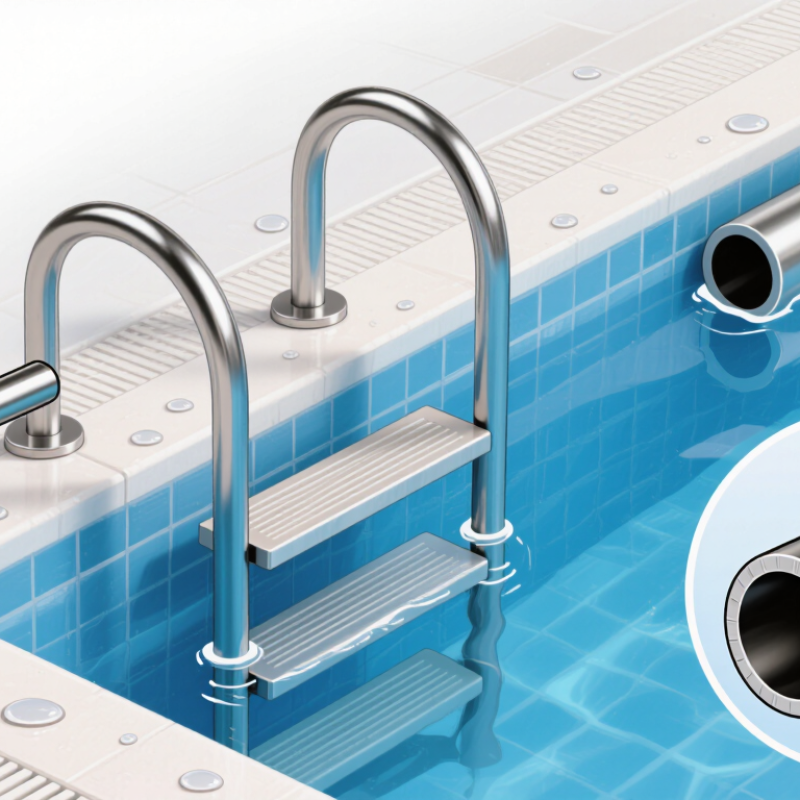
SS 304 is an austenitic stainless steel commonly used for pool ladders because it combines strength, formability, and useful corrosion resistance. Its chromium content helps create a thin passive surface film that limits ordinary rusting. Nickel supports its toughness and ductility. The surface may look bright and dependable. It is not immune to corrosion.
Pool water changes the picture. Chlorides from disinfectants, salt, and evaporation can attack the protective film, especially around welds, scratches, and joints where water lingers.
SS 304 often performs well in regularly maintained freshwater pools, but heavily chlorinated or saltwater settings can be more demanding. That distinction is easy to overlook. When comparing ladders, inspect the weld finish, tube surfaces, and submerged fittings, not just the polished rails.
Rinse away pool residue with fresh water and dry areas that stay wet. Avoid abrasive pads that scratch the surface. Still, I would not call any stainless ladder maintenance-free.
Check for small orange spots or rough patches periodically; early marks may be removable, but persistent pitting deserves attention.
Match the ladder to the pool before comparing step styles. Measure the deck height, water depth, and available space at the entry point. A tape measure and a clear sketch help. For an in-ground pool, check how the ladder will meet the deck and pool wall. For an above-ground pool, confirm that its frame and top rail can support the intended mounting system. The wrong reach can leave the lowest step awkwardly high or the handrails too far from the edge.
Pool shape matters, too. A narrow entry may need a compact ladder, while a broad step area can accommodate wider treads and handrails. Measure clearance behind the ladder so swimmers can pass without brushing a wall or fitting. Check the manufacturer’s dimensions against your actual pool measurements, not only its listed depth. Small differences matter.
SS 304 stainless steel is commonly used for pool ladders, but water chemistry and exposure affect upkeep. Pools with salt or high chloride exposure may need a more corrosion-resistant grade; check the product specifications for your conditions. Rinse and inspect the ladder regularly, especially around welds, fasteners, and anchors. I’d also recheck the fit after installation. A ladder can look right on paper and still feel cramped in the water.
When assessing an SS 304 pool ladder, look beyond its polished shine. SS 304 resists moisture well, but it is not corrosion-proof. Pool chemicals and coastal air can still stain it over time. Check that the tubes feel rigid and the welds are smooth, without pits, sharp edges, or uneven gaps. A heavier feel alone does not prove stronger construction; check the tube specifications and stated load capacity. Ask how the ladder is anchored, too. Poorly fitted sockets can make a sturdy ladder wobble. Small details matter.
Grip deserves close attention, especially when feet and hands are wet. Look for broad, stable steps with a textured or non-slip surface, and check that the texture is comfortable under bare feet. Test the handrails with wet hands if possible. If they feel slick or awkward to hold, they may be less reassuring during entry and exit. Handrails should offer a natural, secure grasp without sharp edges. Before purchase, compare step spacing and confirm that the ladder fits the pool’s depth and installation points. There is no perfect feel for everyone, so consider who will use it most and inspect the finish regularly after installation.
Before choosing an SS 304 pool ladder, measure the finished pool edge and deck—not just the opening in the coping. Check the ladder’s mounting width, step clearance, and anchor layout against your pool structure. Concrete, tile, and composite decking may need different fixing methods. The anchors must suit the surface and support the expected load. Small details matter. A ladder that looks compatible in a product photo may still clash with a raised coping or nearby handrail. Confirm the installation instructions and required tools before drilling. If local pool-safety rules call for electrical bonding, have a qualified professional check the connection.
Maintenance needs deserve equal attention. Rinse the ladder with fresh water after use, especially where pool water is salty or chemical levels fluctuate. Drying the joints can reduce residue buildup. Every few weeks, inspect welds, fasteners, anchor covers, and step surfaces for looseness, pitting, or sharp edges. Tighten hardware only as the installation guide allows; overtightening can damage fittings. Avoid harsh cleaners containing chlorides, which may stain or pit stainless steel. SS 304 resists corrosion, but it is not immune to pool chemicals. That distinction is easy to overlook. If staining returns after cleaning, review water chemistry and ask a pool technician to inspect the ladder rather than assuming the metal is defective.
| Selection Dimension | What to Check | Practical Guidance |
|---|---|---|
| Pool environment | Confirm whether the pool uses fresh water, salt chlorination, or other treatments, and note exposure to coastal air. | SS 304 is commonly used in pool equipment, but chlorides and aggressive chemical conditions can increase corrosion risk. For saltwater, coastal, or otherwise chloride-rich environments, compare SS 316 options and follow the pool-equipment manufacturer’s material guidance. |
| Installation surface | Identify whether the ladder will be fixed to a concrete deck, a prefabricated pool structure, or another substrate. | Check that the mounting system is compatible with the surface and that the deck can support the expected loads. Use the specified anchor type and installation method; do not assume every anchor suits every deck. |
| Anchor fit and deck condition | Measure the anchor sockets and verify their spacing, depth, and condition. Check for loose, cracked, or corroded fittings. | Match the ladder’s post diameter and mounting dimensions to the existing anchors. If the dimensions or condition do not match the installation instructions, have the fittings assessed before use. |
| Water depth and reach | Measure the pool depth where the ladder will be installed and check the ladder’s intended deck-to-water range. | Select a model whose rails and steps suit the pool layout. Confirm the required in-water position and clearance against the product instructions rather than relying on a nominal ladder size alone. |
| Steps and safe access | Review the number and spacing of steps, tread width, handrail shape, and surface grip. | Choose steps that are easy to grasp and stand on for the intended users. Slip-resistant treads and secure handrails can improve access, but they do not replace careful supervision or safe pool practices. |
| Clearance and placement | Check the ladder location against pool walls, coping, covers, nearby fittings, and the normal swimming area. | Ensure the ladder can be used without obstruction and does not interfere with covers or other equipment. Follow the pool layout requirements and any applicable local rules. |
| Fasteners and fittings | Check the materials and compatibility of bolts, sleeves, caps, and other metal components exposed to pool water. | Use the specified compatible fittings. Mixing different metals in a wet, chloride-containing environment can contribute to galvanic corrosion; avoid unapproved substitutions. |
| Routine cleaning | Look for chemical deposits, scale, dirt, or surface discoloration, especially near joints and waterline areas. | Rinse with fresh water and clean with a soft cloth and a mild, chloride-free cleaner. Avoid steel wool, abrasive pads, and cleaners containing hydrochloric acid or bleach unless explicitly permitted by the equipment instructions. |
| Inspection and upkeep | Check regularly for loose anchors, movement, damaged treads, sharp edges, cracks, and signs of corrosion. | Frequency should reflect pool use and water conditions. Tighten or replace parts only as directed; stop using a ladder that is loose or damaged until it has been safely repaired. |
| Instructions and local requirements | Review the ladder’s installation manual, load guidance, maintenance instructions, and applicable pool-safety requirements. | Installation details and safety rules vary by product and location. Follow the specific instructions and consult a qualified installer or local authority where requirements are unclear. |
Selection note: SS 304 is not corrosion-proof. Suitability depends on water chemistry, cleaning practices, installation quality, and exposure conditions; verify compatibility with the pool system before purchase.
Comparing Certifications, Warranty, and Overall Value
A polished finish can look reassuring, but it does not prove a ladder’s grade or load performance. Ask for material traceability and test documents tied to the exact model. ASTM F2286 covers stainless-steel swimming pool ladders; check whether the product was tested against its current edition, rather than relying on a vague “certified” claim. Look closely at welds, handrail joints, and anchor hardware. Small gaps can trap pool chemicals. SS 304 may pit in chloride-rich water, especially when water chemistry is poorly controlled.
Warranty details reveal what the price tag hides. Compare coverage for structural failure, corrosion, finish, labor, and replacement shipping. Read exclusions for chemical imbalance and coastal exposure. A long warranty with broad exclusions may offer little practical protection. The NACE IMPACT study estimated corrosion costs at US$2.5 trillion globally, or 3.4% of world GDP; it also identified potential savings of 15–35% through corrosion-control practices. These figures cover many industries, not pool ladders, but they underline why maintenance and material verification matter.
For overall value, compare the installed cost with expected inspection and replacement needs. Check that anchors suit the deck, and that the ladder feels stable underfoot without sharp edges or loose movement. Ask how often fittings need inspection. A lower price may still be sensible for a lightly used residential pool, but heavy use deserves closer scrutiny. No certificate replaces sound installation.
Measure deck height, water depth, entry width, and clearance behind the ladder. Sketch the area. Small differences matter.
Yes. An in-ground pool needs a proper deck and wall fit. An above-ground pool needs a frame and top rail that support its mounting system.
Compare mounting width, step clearance, anchor layout, and handrail reach with the finished pool edge. Raised coping can cause trouble. Photos aren't enough.
Not always. Salt and chloride exposure can increase corrosion risk. Check the product specifications for your water conditions.
Confirm the deck material, anchors, tools, and installation instructions. Different surfaces may need different fixing methods. Ask a qualified professional about electrical bonding if required.
Rinse it with fresh water after use, especially in salty water. Every few weeks, inspect welds, fasteners, anchors, and steps. Dry the joints when practical.
Avoid harsh cleaners containing chlorides. They can stain or pit stainless steel. If stains return, review water chemistry and ask a pool technician to inspect it.
Request material traceability and test documents for the exact model. Review exclusions for corrosion, chemical imbalance, labor, and coastal exposure. Details are easy to miss.
Compare installed cost with inspection and replacement needs. Check that the ladder feels stable and has no sharp edges or loose movement. I’d still recheck the fit.
Choosing the right SS 304 Pool Ladder starts with understanding how this stainless steel suits a poolside environment and what care it may still need over time. Consider the pool’s type, depth, shape, and available deck space so the ladder’s height, width, and entry angle provide a comfortable fit. A well-matched design should make getting in and out straightforward without obstructing nearby areas.
Look closely at construction quality, secure handrails, step spacing, and slip-resistant surfaces, as these features contribute to everyday comfort and safety. Before purchasing, confirm that the mounting method works with your pool and deck, and check what installation and routine maintenance involve. Finally, compare relevant certifications, warranty coverage, and the overall value offered. A careful review of these factors can help you select a durable, practical ladder suited to your pool and its users.
