
Choosing the best Laminar Jet Fountain supplier requires more than comparing glossy project images. A reliable supplier should demonstrate hydraulic knowledge, documented testing, and practical installation experience. The 2024 United Nations World Water Development Report highlights growing pressure on freshwater resources worldwide. This makes water-efficient fountain design increasingly important for hotels, public plazas, and commercial developments.
Look for suppliers that specify pump efficiency, nozzle output, filtration requirements, basin volume, and control-system compatibility. Their technical drawings should show access points, drainage routes, electrical protection, and maintenance clearances. The U.S. Environmental Protection Agency’s WaterSense program also emphasizes efficient water management and responsible system operation. Although fountains are not standard WaterSense products, its principles remain useful when reviewing refill frequency, splash loss, and filtration performance.
A strong supplier can provide site references, commissioning records, material certificates, and a clear warranty. Ask to inspect a running installation. Watch the jet closely. It should rise cleanly, remain stable, and resist visible turbulence under normal airflow. Request evidence from recognized manufacturers, qualified engineers, or independent testing laboratories. A low quotation may hide weak after-sales support, difficult spare-part access, or expensive cleaning routines. That risk is easy to underestimate. One practical weakness remains: many supplier comparisons rely on brochures rather than operating data. Therefore, this guide evaluates technical capability, lifecycle cost, service responsiveness, and project transparency before recommending any Laminar Jet Fountain supplier.
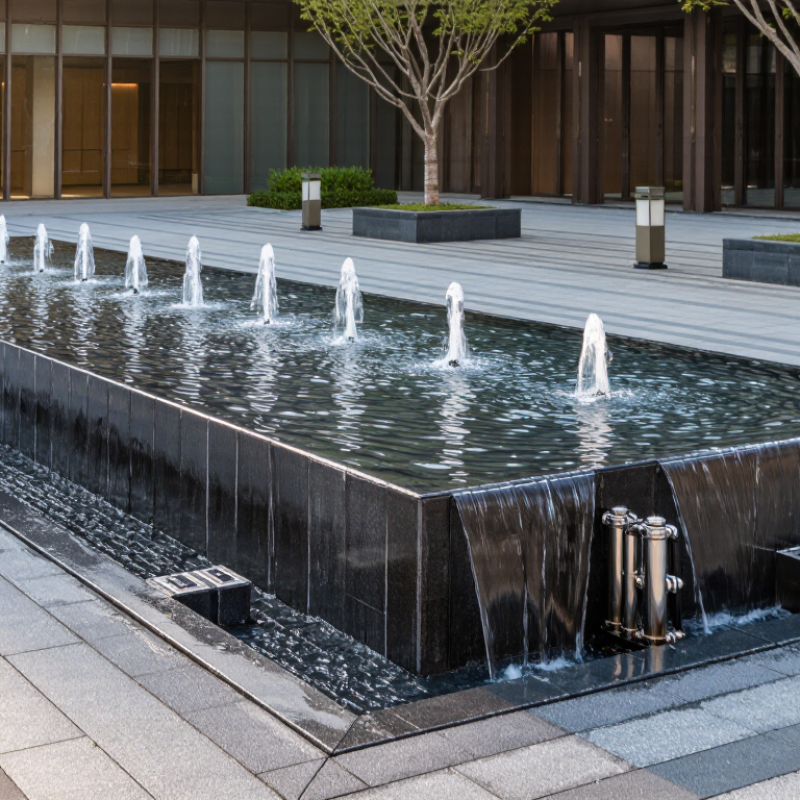
How to Choose the Best Laminar Jet Fountain Supplier?
Define Your Laminar Jet Fountain Project Requirements
Begin with the water effect, not the supplier’s catalog. Record the jet height, arc length, nozzle quantity, lighting needs, and viewing distance. A 25-millimeter nozzle can behave differently under wind and fluctuating pressure. Specify the desired flow rate for every jet. Include operating hours and seasonal conditions.
The U.S. Department of Energy reports that pumps can represent significant electricity use in commercial facilities, especially during extended operation. Therefore, request pump efficiency data, not only decorative photographs. Grand View Research’s 2024 water features market analysis projects growth above 5% annually through the decade. This suggests rising demand, but market growth does not guarantee technical quality. Ask for hydraulic calculations, filtration details, splash control, and maintenance intervals.
Site conditions matter more than many buyers expect. Provide the basin dimensions, water depth, pipe routes, local wind exposure, and available electrical supply. Require corrosion-resistant materials and accessible service points. Request test videos showing clear, continuous arcs. Better still, inspect a completed installation. I once underestimated wind pressure on a narrow courtyard project. The jets looked impressive indoors, then drifted outdoors. That mistake changed the specification.
Ask the supplier to state tolerances for jet height, flow variation, pump noise, and lighting alignment. Confirm replacement-part availability and commissioning support. A reliable quotation should separate equipment, installation, controls, freight, and future maintenance. Leave room for adjustment. Real sites rarely match drawings perfectly.
| Project Dimension | Recommended Requirement to Define | Typical Planning Data | Why It Matters When Selecting a Supplier | Priority |
|---|---|---|---|---|
| Installation Environment | Specify whether the fountain will be installed indoors, outdoors, in a pool, on a plaza, or in a public landscape. | Outdoor installations require weather-resistant enclosures, drainage, freeze protection, and corrosion-resistant materials. | The supplier must be able to match the equipment enclosure, electrical protection, materials, and maintenance design to the site conditions. | High |
| Number of Laminar Jets | Define the total number of jets and whether each jet must operate independently or in groups. | Small decorative projects commonly use 2–8 jets; larger interactive or choreographed installations may use more than 8. | Jet quantity affects pump sizing, control architecture, manifold design, installation time, and total operating cost. | High |
| Jet Height | Set the required vertical height for the water stream under normal operating conditions. | Common decorative heights range from approximately 0.8 m to 3 m, depending on nozzle design, wind exposure, and available pump pressure. | A qualified supplier should provide hydraulic calculations rather than selecting a pump solely from the desired height. | High |
| Water Stream Length | Define the distance the water must travel from the nozzle to the receiving point or target basin. | Short indoor streams may travel less than 2 m, while outdoor installations may require 3 m or more. | Stream length influences nozzle alignment, water pressure, splash control, basin dimensions, and visual performance. | High |
| Nozzle Diameter | Confirm the desired nozzle outlet size and whether the stream should appear narrow, bright, or highly visible. | Laminar jet outlets are often selected in the approximate range of 10–25 mm, depending on the intended stream effect. | Nozzle diameter affects flow rate, stream thickness, pump requirements, lighting integration, and water consumption. | Medium |
| Flow Rate and Pump Capacity | Request the calculated flow rate, total dynamic head, pump efficiency, and operating point for the complete system. | A small jet may require roughly 10–30 L/min, while larger or taller jets can require substantially more; final values depend on design conditions. | Accurate hydraulic data helps prevent weak streams, excessive turbulence, high energy use, and premature pump wear. | High |
| Water Quality | Identify whether the system will use potable water, treated recycled water, or recirculated basin water. | Recirculating systems generally need filtration, debris control, water-level monitoring, and a maintenance schedule. | Water quality directly affects nozzle blockage, laminar flow stability, pump life, lighting clarity, and cleaning frequency. | High |
| Lighting Requirements | Define whether the jets require integrated underwater lighting, a specific light color, dimming, or programmable effects. | Common options include white or color-changing LED lighting with low-voltage underwater fixtures and sealed cable connections. | The supplier should coordinate the nozzle, light position, cable routing, transformer, controller, and waterproofing details. | Medium |
| Control and Synchronization | Specify manual control, timer operation, sensor activation, music synchronization, or programmed water movements. | Control systems may use relays, variable-frequency drives, programmable controllers, or digital communication interfaces. | Clear control requirements allow the supplier to provide compatible hardware, software, commissioning, and operator training. | High |
| Electrical Supply | Provide the available voltage, frequency, phase configuration, installed power capacity, and local electrical standards. | Small systems may use single-phase power; larger pump and lighting systems may require three-phase power and dedicated protection. | Electrical compatibility affects safety, panel design, cable sizing, installation approvals, and operating reliability. | High |
| Material and Corrosion Resistance | Define the required materials for nozzles, manifolds, supports, fasteners, and underwater housings. | Common choices include stainless steel, engineered polymers, and corrosion-resistant alloys selected according to water chemistry and exposure. | Material selection determines service life, appearance, resistance to chemicals, and suitability for coastal or chlorinated environments. | High |
| Wind and Splash Conditions | Record the typical wind exposure and establish acceptable splash, drift, and overspray limits. | Open plazas and roof areas usually require stronger stream control, larger catch basins, wind sensors, or automatic shutoff functions. | A supplier should demonstrate how the design protects nearby walkways, electrical equipment, and building surfaces. | High |
| Basin and Drainage | Define basin dimensions, usable water depth, overflow capacity, drain position, and access for cleaning. | Designs should account for evaporation, splash loss, overflow during heavy rain, and safe access to pumps and filters. | Proper drainage and access reduce flooding risks and make routine cleaning, inspection, and winterization easier. | High |
| Safety and Compliance | List applicable electrical, water-feature, public-access, slip-resistance, and machinery safety requirements. | Public projects typically require protected electrical circuits, secure covers, safe walking surfaces, and controlled access to equipment. | The supplier should provide drawings, protection details, test records, manuals, and documentation required for approval. | High |
| Noise Limits | Set an acceptable noise level for pumps, ventilation, valves, and water impact in the surrounding area. | Quiet public or indoor environments may require vibration isolation, low-noise pumps, acoustic treatment, and remote equipment rooms. | Noise control is essential for hotels, residential developments, museums, restaurants, and other noise-sensitive locations. | Medium |
| Maintenance Access | Define how technicians will reach pumps, filters, valves, lights, controllers, and nozzle assemblies. | Access panels, lifting points, isolation valves, removable grilles, and clear service space should be included in the design. | Good access reduces maintenance time, labor cost, downtime, and the risk of damage during servicing. | High |
| Energy Consumption | Set an operating schedule and request estimated power consumption for pumps, lighting, controls, and auxiliary equipment. | Energy use varies with pump head, flow rate, operating hours, lighting load, and control strategy; variable-speed control may reduce consumption. | Comparing lifecycle energy costs provides a more realistic supplier evaluation than comparing purchase price alone. | Medium |
| Budget and Total Cost | Separate the budget into equipment, civil works, electrical installation, controls, transport, commissioning, and ongoing maintenance. | Request a line-item quotation with exclusions, taxes, delivery terms, installation responsibilities, and optional features clearly identified. | Transparent pricing makes supplier quotations comparable and helps prevent unexpected costs during installation. | High |
| Lead Time and Delivery | Set the required delivery date and identify project milestones for drawings, approvals, manufacturing, shipping, and installation. | Custom fountain systems require time for technical confirmation, fabrication, testing, packing, and site coordination. | A supplier with a clear production schedule and realistic delivery commitments reduces project delays. | High |
| Warranty and After-Sales Support | Confirm warranty duration, covered components, response time, spare-parts availability, remote support, and commissioning service. | Request written warranty terms for pumps, controllers, lighting, nozzles, seals, and structural components separately when applicable. | Reliable support protects the investment and helps restore operation quickly if a component fails. | High |
Planning note: Final jet dimensions, flow rates, pump specifications, electrical loads, and safety measures should be confirmed through site-specific hydraulic, structural, electrical, and environmental calculations.
Record jet height, arc length, nozzle quantity, lighting needs, and viewing distance. Specify flow rates for each jet. Include operating hours, seasonal weather, and expected wind exposure.
Provide basin dimensions, water depth, pipe routes, electrical supply, and nearby wind conditions. Outdoor wind can bend narrow water arcs. I once underestimated this problem. The indoor test looked perfect, but the outdoor jets drifted.
Request hydraulic calculations, pump curves, filtration details, and commissioning records. Ask for nozzle tolerances and flow variation limits. Photos alone prove little.
Inspect wet components, seals, strainers, control cabinets, and access panels. Look for corrosion-resistant materials and accessible service points. A polished surface is not enough.
Consider 316L stainless steel for wet parts and corrosion-resistant fasteners. Viewing tubes should resist ultraviolet exposure. Request material certificates when possible.
Check adjustable jet heights, programmable sequences, lighting layouts, and maintenance access. Confirm whether custom parts can be serviced locally. Customization can reveal weak engineering.
Confirm emergency-stop access, grounding, residual-current protection, and splash-zone separation. Ask for documented testing against applicable local standards. Safety needs equal scrutiny.
Request pump efficiency data, not only decorative photographs. Compare electricity use, filtration needs, cleaning intervals, and replacement parts. Cheap pumps may become expensive during continuous operation.
Support should include hydraulic drawings, site measurements, nozzle calibration, and operator training. Request a commissioning checklist and written service response times. Leave room for adjustment.
Yes. Request field references and inspect a working installation when possible. Watch arc stability, lighting alignment, pump noise, and water clarity. Test the silence, too.
Choosing the best Laminar Jet Fountain supplier begins with clearly defining your project requirements, including fountain size, water effects, installation environment, control features, budget, and expected operating conditions. Once your needs are established, compare suppliers based on their industry expertise, product quality, design flexibility, and ability to provide customized solutions. Pay close attention to the materials used, lighting and control technology, safety features, energy efficiency, and the level of installation guidance or technical support available.
A reliable supplier should also offer transparent pricing, practical warranty coverage, accessible maintenance services, and dependable delivery schedules. Before making a final decision, verify the supplier’s reputation through relevant certifications, documented quality procedures, completed projects, and genuine customer references. Evaluating all these factors together will help you select a partner capable of delivering a durable, visually impressive, and properly supported Laminar Jet Fountain that meets both creative expectations and long-term performance goals.
