
+91 99994 28905 / +91 98731 30400 [email protected]
0%

Choosing a swimming pool contractor is a practical decision, not just a design exercise. Custom Swimming Pool Construction can involve site assessment, structural planning, waterproofing, filtration, finishes, and long-term maintenance. Each choice affects how the pool looks and performs. A hillside plot, for example, may need different drainage and retaining solutions than a flat courtyard.

This guide introduces ten China-based companies working in custom pool design and construction. It helps readers compare their stated services, project portfolios, material options, and communication practices. A polished photograph is useful, but it cannot show every detail. Ask how a company handles water circulation, tile joints, equipment access, and after-sales support. Details matter. Project needs differ.

The list is intended as a starting point, not a universal ranking or a guarantee of results. Company capabilities and service coverage can change, and public portfolios may not reveal every constraint behind a completed project. Before choosing a contractor, request recent references, clarify the scope in writing, and confirm who is responsible for design, construction, and maintenance. Not every attractive proposal is the right fit. Comparing specific evidence against your site, budget, and expectations can make the decision more reliable—and may also reveal questions you had not considered.
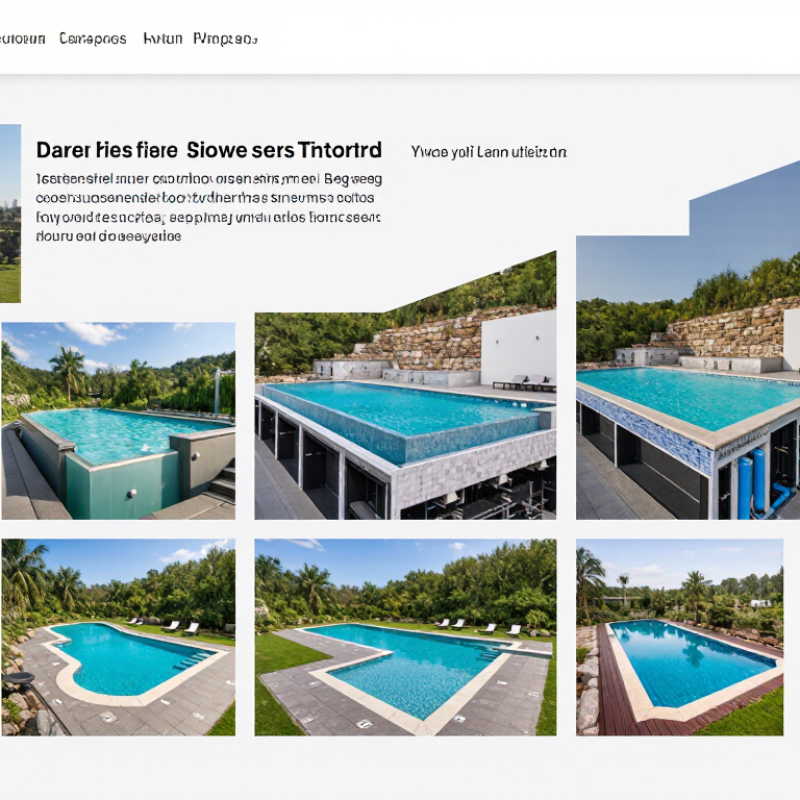
China Top 10 Custom Swimming Pool Construction Companies

Definition and Scope of Custom Swimming Pool Construction in China

In China, custom swimming pool construction is a site-specific process, not simply the installation of a standard basin.
It covers planning around the owner’s needs, plot size, soil conditions, climate, and intended users. Projects may serve private homes, hotels, or shared facilities, with different requirements for depth, access, and daily use. The scope commonly includes site assessment, design coordination, excavation, structural work, waterproofing, circulation and filtration equipment, commissioning, and handover. Some contracts also include heating, covers, or ongoing maintenance. The boundary is not always tidy.

Data offers context, but not a direct measure of pool demand. China’s National Bureau of Statistics reported an urbanization rate of 66.16% at the end of 2023, shaping where residential and leisure projects are built. The Global Wellness Institute’s 2024 Global Wellness Economy Monitor valued wellness real estate at US$438 billion in 2023 and projected US$913 billion by 2028. That figure covers a broad sector, not swimming pools alone. For an actual project, designers still need to test access routes, drainage, equipment-room space, and local site constraints. A polished drawing cannot resolve every condition underground; early surveys can prevent costly redesigns.

Criteria for Selecting the Top 10 Pool Construction Companies

A credible pool contractor should show more than glossy photographs. Review completed projects with similar dimensions, soil conditions, and intended use. Ask how the team handled excavation, drainage, reinforcement, waterproofing, and equipment placement. Specific answers matter. Vague promises do not. Request drawings that show pool depth, circulation routes, access points, and the location of pumps and filters. A site visit can reveal details that images miss, such as uneven coping or cramped service access.

Check the company’s project history, technical staff, and communication process. Ask for recent client references, then discuss schedule changes, maintenance guidance, and how defects were addressed. Compare written quotations line by line: materials, labor, site preparation, testing, and exclusions should be clear. A low price may omit essential work. It is worth asking twice. Confirm who supervises each construction stage and how progress is documented, including photos of concealed pipework before backfilling. Also assess whether the proposed design fits the site’s sunlight, wind exposure, drainage, and available utility capacity. A neat portfolio can still hide weak coordination, and no checklist catches everything. Trust matters, but verify the details.

Profiles of China’s Top 10 Custom Swimming Pool Construction Companies

Profiles of China’s top ten custom swimming pool construction companies should reveal more than attractive finished projects. Each profile can examine design capability, construction experience, and the services offered, from site assessment to installation and maintenance. Look for evidence of completed pools in different settings, such as compact courtyards, hotel terraces, and family gardens. Clear project descriptions matter. So do dated photographs and specific explanations of materials, circulation systems, and finish choices.

A useful profile also explains how a company handles practical constraints. These include soil conditions, drainage, access for construction equipment, and the owner’s budget. Ask whether the team provides drawings, schedules, and written details about warranties. Customer references can add useful context, especially when they describe communication during delays or changes. Claims are easy to make. Verifiable details are better.

Comparisons should consider more than price or visual style. A low estimate may exclude excavation, lighting, or ongoing care, so check what each proposal covers. Some profiles may offer limited information; that is worth noticing, not glossing over. Project photographs can be polished, and they rarely show every repair or compromise. A careful reader should seek consistent evidence and ask direct questions before choosing a contractor.

Typical Custom Pool Construction Timeline

Indicative planning ranges for a residential custom pool project, shown in calendar days. Permitting, weather, site conditions, design choices, and local requirements can substantially affect the actual schedule; phases may also overlap.

Comparison of Design Services, Technologies, and Project Capabilities

A useful comparison of the ten leading custom pool builders should look beyond polished renderings. Examine whether design teams map sun, wind, drainage, and sightlines before fixing the pool’s shape. Strong proposals show equipment locations, pipe routes, lighting positions, and maintenance access. The details matter. Ask how the design changes for tight urban lots, sloped ground, or limited machinery access. A beautiful plan can still fail on site.

Technology claims need measurable proof. The U.S. Department of Energy’s Energy Saver guidance estimates that pool covers can reduce heating costs by 50–70% and water loss by 30–50%. Compare whether builders include cover integration, efficient pumps, automated controls, and clear commissioning instructions. Ask for expected energy use and maintenance needs, not only feature lists. Savings depend on climate, pool use, and operating habits.

Project capability is equally important. Check whether each company can coordinate excavation, structural work, plumbing, electrical systems, landscaping, and final testing under one schedule. Request examples with similar site conditions, plus timelines and change-order records. A builder may excel at complex concrete forms yet offer limited aftercare. That gap is easy to overlook. No single ranking captures every project’s risks; compare documented performance against your own site and priorities.

China Top 10 Custom Swimming Pool Construction Companies - Comparison of Design Services, Technologies, and Project Capabilities

This table compares ten core service and technology areas relevant to custom pool projects. It is not a verified ranking or a company-by-company assessment; capabilities vary by contractor and project. Confirm each item with project-specific drawings, specifications, and references.

Comparison Area Design Services to Compare Common Technologies Project Capability Evidence to Request
1. Site planning Pool layout, access routes, levels, setbacks, and coordination with landscape and building plans. Survey-based plans; 2D drawings and, where specified, 3D visualizations. Site survey, coordinated drawings, drainage concept, and confirmation of local approval requirements.
2. Pool form and shell Shape, depth profile, steps, benches, and structural design suited to site conditions. Reinforced cast-in-place concrete, shotcrete/gunite, or prefabricated shell systems, depending on the project. Structural drawings, material specifications, construction sequence, and relevant project references.
3. Waterproofing and finish Finish selection coordinated with the substrate, detailing, and expected use. Tile, plaster or aggregate finishes, and membrane systems; installation details depend on the selected shell and finish. Product data sheets, joint and penetration details, water-testing procedure, and written warranty terms.
4. Circulation and hydraulics Pipe routes, inlet and outlet locations, equipment-room layout, and system sizing. Skimmer or overflow arrangements; pump and pipe selection based on design flow and system head loss. Hydraulic schematic, equipment schedule, flow-rate basis, and access provisions for servicing.
5. Filtration and disinfection Water-treatment approach selected for pool volume, bather load, and intended operating routine. Sand or cartridge filtration; chlorine-based dosing or salt-chlorine generation. Salt systems still produce chlorine and require water-chemistry management. Treatment schematic, operating guidance, chemical-storage provisions, and maintenance schedule.
6. Heating and energy Heating strategy based on climate, desired season of use, pool cover, and energy supply. Air-source heat pumps, gas heaters, or solar thermal systems; performance depends on operating conditions and system sizing. Heat-loss assumptions, equipment capacity, electrical or fuel requirements, and provision for a pool cover.
7. Lighting and electrical Lighting positions, underwater visibility, switching zones, and coordination with electrical design. Underwater LED fixtures and suitable transformers or power supplies; electrical protection must follow applicable local codes. Electrical layout, fixture specifications, protection details, and testing and handover records.
8. Automation and controls Control scope for circulation, heating, lighting, and water-treatment equipment. Timers, control panels, sensors, and compatible remote-control options, subject to equipment compatibility and network availability. Control-system schedule, wiring diagram, user training, and documented manual operating procedures.
9. Water features and special uses Integration of features such as steps, benches, spillways, jets, or a shallow lounging area. Dedicated feature pumps or separately controlled circuits may be used where required by the design. Feature-specific hydraulic details, access for maintenance, and confirmation of effects on total system flow.
10. Construction, commissioning, and aftercare Construction schedule, inspection stages, commissioning plan, and owner handover. Installation and commissioning procedures should be specific to the selected structure, equipment, and treatment system. Milestone schedule, testing records, as-built documents, operating instructions, warranty terms, and service arrangements.

Key Factors for Choosing a Chinese Custom Pool Contractor

Choosing a Chinese custom pool contractor takes more than comparing attractive renderings. Ask who will handle site measurements, structural drawings, plumbing, and installation. A clear answer should identify responsible teams and show how design changes affect cost and schedule. Request project photos, but also ask about pool size, climate, and construction challenges. Similar details make references more useful.

Check how the contractor specifies waterproofing, filtration, circulation, and finish materials. Ask for written testing steps, including how leaks and water flow will be checked before handover. Confirm what is included in the quotation, such as shipping, on-site work, training, and replacement parts. Vague line items can become expensive surprises. Details matter.

Communication is part of quality. Agree on drawing approvals, progress updates, and a named contact before production begins. Have technical documents reviewed by a qualified local professional, since site conditions and applicable requirements differ. A polished proposal is not proof of good execution. Speak with past clients when possible, and ask what went wrong as well as what went well. Contractors may not have perfect records; their response to a specific problem can still reveal how they work.

FAQS

What should a contractor profile include?

It should show completed pools, dated photos, materials, and services. Look for clear project details.

How can I compare pool construction experience?

Compare projects with similar settings, such as small courtyards or hotel terraces. Ask about site conditions and construction challenges.

What practical issues should be discussed before construction?

Discuss soil, drainage, equipment access, budget, and the work schedule. These details shape the project.

What should a written quotation cover?

Check whether it includes excavation, lighting, shipping, on-site work, training, and replacement parts. Vague items can become costly.

How can I check the pool’s technical quality?

Ask for written details on waterproofing, filtration, circulation, and finish materials. Request leak and water-flow testing steps.

What should I ask about communication?

Confirm who handles measurements, drawings, installation, and updates. Agree on a named contact before production begins.

Are project photos enough to judge a contractor?

No. Polished photos may hide repairs or compromises. Ask for dated examples and speak with past clients when possible.

How should I review technical documents?

Ask a qualified local professional to review them. Site conditions differ, and a polished proposal is not proof of execution.

What if a contractor has incomplete records?

Ask about a specific delay or change and listen to the response. It may be imperfect, but details can still help.

Conclusion

This article explores the scope of Custom Swimming Pool Construction in China, from initial planning and site assessment to design, engineering, construction, and finishing. It explains how clients can evaluate contractors using practical criteria such as relevant experience, design flexibility, technical capabilities, project management, quality control, communication, and after-sales support. The profiles of ten leading companies offer a structured way to understand the range of expertise available across the industry without relying on a single type of project or service model.

A side-by-side comparison considers design services, construction technologies, materials, and the ability to deliver projects of different sizes and levels of complexity. The article also highlights key factors to weigh before choosing a contractor, including budget, schedule, site conditions, safety practices, maintenance needs, and clarity of contractual responsibilities. Together, these insights help readers make a well-informed decision suited to their goals and project requirements.

Ethan

Ethan

Ethan is a dedicated marketing professional with a deep understanding of the company’s products, services, and the evolving needs of its customers. With a strong ability to connect market insights with practical business solutions, he plays an important role in communicating the company’s value to......