
+91 99994 28905 / +91 98731 30400 [email protected]
0%

A Submersible Underwater LED Light can transform a dark pond, pool, fountain, or boat-side work area into a clear, inviting space. But choosing one is not just about brightness. Water depth, installation method, beam angle, cable length, and the light’s intended use all shape the result. A narrow beam may highlight a fountain jet, while a wider spread can reveal more of a pond floor. Small details matter.

This 2026 guide explores underwater LED lights for sale and the features buyers should compare before choosing a model. Look closely at housing materials, seals, mounting hardware, and the manufacturer’s stated operating conditions. Stainless steel can offer a sturdy finish, but material alone does not prove long-term performance. Check product documentation, warranty terms, and independent reviews where available. A bright display is not enough.

A trustworthy industry expert’s name and a verifiable quotation were not included in the source material provided for this introduction. Inventing an attribution would undermine the reliability this guide should offer. Instead, the comparison focuses on practical selection criteria and clear product evidence. It also recognizes a real limitation: specifications cannot fully predict how a light will look in cloudy water, against dark stone, or beneath rippling reflections. Treat listed performance as a starting point, then match it to the actual installation. The best choice is the one suited to the site, not simply the one with the biggest number on its box.
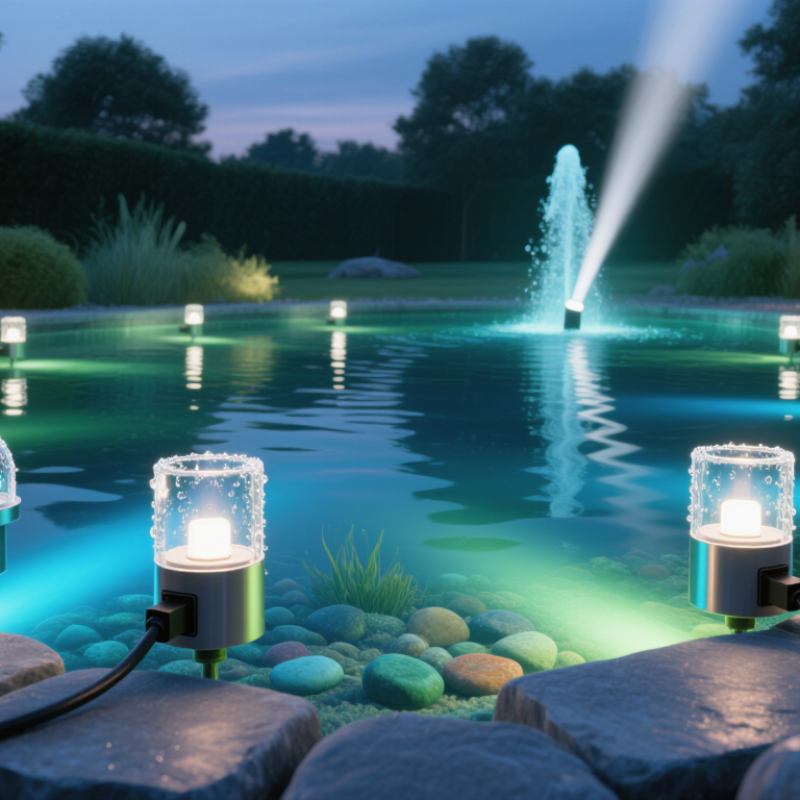
2026 Top Submersible Underwater LED Lights for Sale

What Submersible Underwater LED Lights Are and How They Work

Submersible underwater LED lights are sealed fixtures that keep water away from electrical parts. Inside, LED chips convert electrical energy into light, while a driver regulates current. Power may come through a low-voltage cable and transformer, or from a sealed battery. Well-designed fixtures transfer heat from the chips into the housing. Water helps carry heat away, but it cannot compensate for poor thermal design. Details matter.

Before choosing a light, match its stated depth rating and intended water conditions to your installation. A garden pond, fountain, or pool may expose seals to different chemicals, debris, and temperature changes. Check cable entry points, lens condition, and the maker’s mounting and maintenance instructions. A bright beam alone does not prove the fixture is suitable. Keep electrical connections dry, and have wiring handled by a qualified installer when needed.

Tips: Clean the lens with a soft cloth and inspect seals for cracks. Test the light as instructed before final placement. Note its depth and cable route; those details are easy to forget later.

Key Features of Top Underwater LED Lights in 2026

2026

Top Submersible Underwater LED Lights for Sale

Key Features of Top Underwater LED Lights in 2026

Choosing an underwater LED light starts with its actual installation conditions. Check the specified immersion depth and ingress protection rating, rather than relying on “waterproof” alone. A clear glass lens, sealed cable entry, and corrosion-resistant housing help protect the light from moisture and pool chemicals. Small details matter. Confirm the product is designed for continuous submersion, and have a qualified installer check the electrical connection.

Brightness and beam angle shape how a pool or pond looks after dark. A wide beam can soften shadows across a shallow area, while a narrower beam can highlight a fountain or textured wall. Look for published lumen output, color temperature, and dimming options. Efficient LEDs can reduce energy use, but figures on a specification sheet cannot show exactly how light will look against your water and finish. A sample test may be worth the extra effort.

Tips: Before buying, measure the mounting position and cable route. Compare the stated operating depth with your real setup, and check that replacement parts are available. Keep the installation manual. Even a well-rated light can disappoint if its beam is poorly matched to the space.

Common Uses for Submersible Underwater LED Lighting

Submersible underwater LED lights serve practical and visual needs in ponds, fountains, pools, aquaculture tanks, and around docks. In a garden pond, a narrow beam can reveal stepping stones after dusk; a fountain needs sealed fixtures that tolerate spray and changing water levels. For fish tanks and production systems, lighting schedules should suit the species and operation, not merely create a brighter display. FAO’s The State of World Fisheries and Aquaculture 2024 reports 94.4 million tonnes of aquatic animals came from aquaculture in 2022. That figure shows the sector’s scale, but it does not mean every facility needs underwater lights.

Small details matter. Match the fixture’s submersion rating to its actual depth and installation conditions, and check cable seals, heat management, and resistance to corrosion. Saltwater is especially demanding. A sealed light can still fail if its cable connection is poorly protected. The U.S. Department of Energy’s Energy Saver guidance says LEDs can use up to 90% less energy and last up to 25 times longer than incandescent bulbs; actual savings depend on the system and use. Brightness is not always better. A reflective pool wall or a misplaced beam can cause glare, so test the angle at night before fixing the light permanently.

2026 Top Submersible Underwater LED Lights for Sale - Common Uses for Submersible Underwater LED Lighting

Common Use Typical Installation Common Light Choices Key Selection Considerations
Swimming pools Built into or mounted on the pool wall, below the waterline. White or color-changing LEDs; pool luminaires commonly use low-voltage power. Choose a fixture designed for the pool type and installation method. Follow applicable electrical codes and use the required protective devices, such as GFCI protection where required.
Ponds and garden water features Placed underwater near pond edges, plants, stones, or waterfalls. Warm or neutral white for natural-looking scenes; RGB options for decorative effects. Check the fixture’s immersion rating and installation instructions. Consider cable routing, water clarity, and whether the light can be accessed for cleaning or maintenance.
Fountains Mounted in a basin or positioned to illuminate water jets and cascades. Compact white or RGB fixtures, selected to suit the size and shape of the fountain. Allow for water movement, splashing, and regular servicing. Confirm that the fixture and cable are suitable for the intended wet or submerged location.
Boats and marine installations Installed through or attached to a suitable part of the hull, or mounted underwater as specified by the manufacturer. Marine-rated white or colored lights; many systems are designed for common boat electrical systems such as 12 V or 24 V DC. Verify compatibility with the boat’s voltage, hull material, and installation method. Use marine-suitable components and follow the vessel and fixture manufacturers’ instructions.
Aquariums and display tanks Positioned in or around the tank only when the fixture is specifically rated for that use. White or color-adjustable lighting, chosen for the display and its aquatic inhabitants. Check aquarium suitability, heat output, and the lighting needs of plants or animals. Do not submerge a light unless its instructions explicitly allow immersion.
Docks, piers, and waterfront steps Mounted underwater near a dock edge, piling, or step to provide localized illumination. White or colored marine-suitable LEDs, selected for the viewing area and water conditions. Assess exposure to corrosion, debris, waves, and changing water levels. Ensure mounting hardware and electrical components are intended for the environment.
Decorative water displays Used in reflecting pools, indoor water walls, and other designed water features. Single-color or RGB lighting, with beam angle and brightness matched to the feature. Consider glare, viewing distance, water depth, and access for maintenance. Match the fixture’s immersion conditions to the actual installation.

Note: An IP68 rating indicates protection against continuous immersion under conditions specified by the manufacturer; it does not define one universal maximum depth or immersion time. Always check the product documentation and local electrical requirements.

How to Compare Submersible Underwater LED Lights for Sale

2026 Top Submersible Underwater LED Lights for Sale
How to Compare Submersible Underwater LED Lights for Sale

Compare verified performance, not just advertised wattage. Ask for lumen output, beam angle, color temperature, and an LM-79 photometric report. The IES LM-79 method standardizes electrical and photometric measurements for solid-state lighting, making product claims easier to compare. Check the exact IP68 depth and test duration, too; “submersible” alone does not tell you how deep or how long a fixture can operate. Water changes everything. In a pool, clear lenses and narrow beams can create bright patches, while wider beams may suit shallow steps or ledges.

Inspect the housing material, cable length, connector, and power-supply requirements before choosing. Stainless steel may suit some installations, but water chemistry and maintenance still matter. Ask whether the product is rated for your specific water environment. The U.S. Department of Energy reports that LEDs use at least 75% less energy and last up to 25 times longer than incandescent lighting. That is general LED guidance, not a guarantee for underwater fixtures; seals, heat, and installation affect service life. A detail people miss: verify that the quoted lumen figure applies to the complete fixture, not only its LED chips. And leave some room for doubt. Real water can make a promising beam look uneven.

2026 Top Submersible Underwater LED Lights for Sale: How to Compare

Compare light colors by their representative peak wavelength. Values are approximate examples for common colored LEDs, not specifications for any particular product.

Blue and green LEDs emit shorter wavelengths than amber and red LEDs. When choosing a submersible light, also compare verified waterproof rating, brightness, beam angle, power requirements, and the clarity and depth of the water where it will be used. Water conditions affect visibility, so wavelength alone does not determine performance.

Safety, Installation, and Maintenance Considerations

For 2026, compare submersible underwater LED lights by their stated immersion rating, operating voltage, and intended water environment. A light made for a garden pond may not suit a swimming pool. Check the product instructions and confirm that its cable, seals, and power supply are designed for continuous submersion. Do not judge safety by a thick-looking housing alone. Small details matter.

Before installation, switch off power at the source and have a qualified electrician handle wiring and protective devices. Keep connections out of the water unless the instructions explicitly allow otherwise. Allow enough cable for servicing, but avoid loose loops that could snag or strain the fitting. Test the light as directed before placing it underwater. The exact setup varies.

After installation, inspect the lens, cable, and seals regularly for cracks, wear, or moisture. Turn off power before cleaning or removing the fixture. Use a soft cloth to clear algae and mineral deposits; abrasive pads can scratch the lens and reduce light output. If the water looks cloudy or the light flickers, stop using it and check the manual or ask a qualified technician. It is easy to postpone a small inspection. That is often the part worth reconsidering.

FAQS

What is a submersible underwater LED light?

It is a sealed fixture designed to keep water away from electrical parts. LED chips produce light, while a driver regulates current.

How deep can an underwater LED light operate?

Check its stated immersion depth and test conditions. “Submersible” alone does not specify how deep or how long it can operate.

What should I check before installing one?

Measure the mounting spot and cable route. Inspect the lens, cable entry, seals, and housing for damage or corrosion.

How do beam angle and brightness affect the result?

A wide beam can soften shadows on shallow steps. A narrow beam may highlight a fountain or textured wall. Test it in your water if possible.

Which product details are useful for comparing lights?

Compare lumen output, beam angle, color temperature, and power needs. Check whether the lumen figure describes the complete fixture, not just its LED chips.

Does an IP68 rating guarantee suitability for every pool or pond?

No. Check the exact depth and test duration, plus suitability for your water conditions. Chemicals and temperature changes can affect seals.

Do LED lights always last a long time underwater?

Not necessarily. LEDs can be efficient, but seals, heat management, and installation affect service life. The specification sheet cannot predict every real-world result.

How should I care for an underwater LED light?

Clean the lens with a soft cloth and inspect seals for cracks. Keep electrical connections dry, follow the manual, and note the cable route. Easy to forget.

Conclusion

Submersible underwater LED lights are sealed lighting fixtures designed to operate beneath the water’s surface. They produce light through energy-efficient LED components housed inside a protective, waterproof enclosure. In 2026, leading options can be compared by brightness, color choices, beam spread, power source, material durability, and controls such as adjustable settings or timers. The right combination depends on the water environment and the effect you want to create.

A Submersible Underwater LED Light can add visibility and atmosphere to ponds, fountains, pools, water features, and decorative displays. Before buying, check that the fixture is suitable for the intended depth and installation conditions, and review its cable, power requirements, and mounting method. Follow the manufacturer’s instructions, disconnect power before handling or cleaning, and inspect seals and cables regularly. Proper installation and routine maintenance help keep the light working reliably and reduce the risk of damage.

Julian

Julian

Julian is a dedicated marketing professional with a deep understanding of the company’s products, customers, and industry landscape. With a strong combination of strategic insight, market awareness, and clear communication skills, he helps transform complex product information into practical,......